Zirconium Crowns on Implants
Zirconium crowns on implants are commonly chosen for the visible final tooth placed over a healed dental implant because they combine a tooth-coloured appearance with a strong ceramic restoration.
In everyday dental language, people often say “zirconium crown,” while the restorative material used for the crown is generally zirconia, a high-strength ceramic based on zirconium dioxide.
The crown is not the implant itself. The implant sits in the jawbone, while the zirconia crown forms the visible tooth above it.
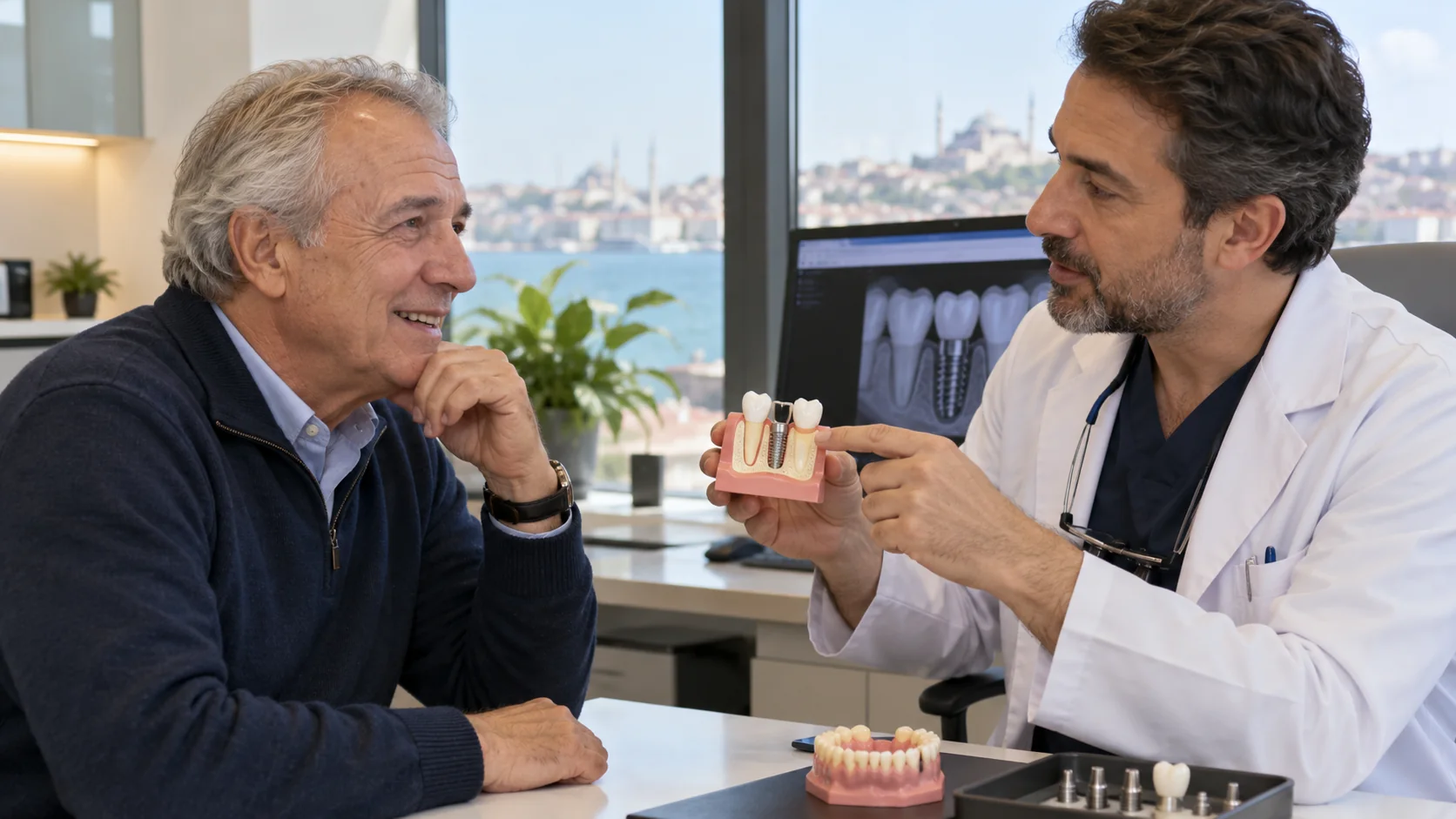
What is a zirconium crown on a dental implant?
A dental implant replaces the root portion of a missing tooth. After the implant has healed sufficiently, a restorative component connects the implant to the final crown.
The zirconia implant crown is the ceramic tooth-shaped restoration placed on top. Its shape, colour and bite are designed to fit the surrounding teeth and your individual mouth.
Zirconia can be used for single implant crowns and may also form part of implant-supported bridge or full-arch treatment, depending on the restoration being planned.
See the wider dental implant procedure in Turkey.
Why are zirconium crowns used on dental implants?
The final material is selected according to appearance, bite, restoration position and the type of implant treatment.
Tooth-coloured material
Zirconia does not have the grey appearance of a metal crown and can be designed to resemble surrounding teeth.
High strength
Zirconia is used for implant restorations where the crown needs to tolerate normal chewing forces.
Digital design
Modern implant crowns can be planned from digital scans so the shape and bite are designed around the implant position.
Suitable for visible teeth
The crown can be shaped and shaded with the surrounding smile in mind, particularly in aesthetic areas.
Single teeth or bridges
Zirconia may be used for an individual implant crown or as part of a larger implant-supported restoration.
No natural tooth underneath
An implant crown is supported by the implant system rather than a prepared natural tooth root.
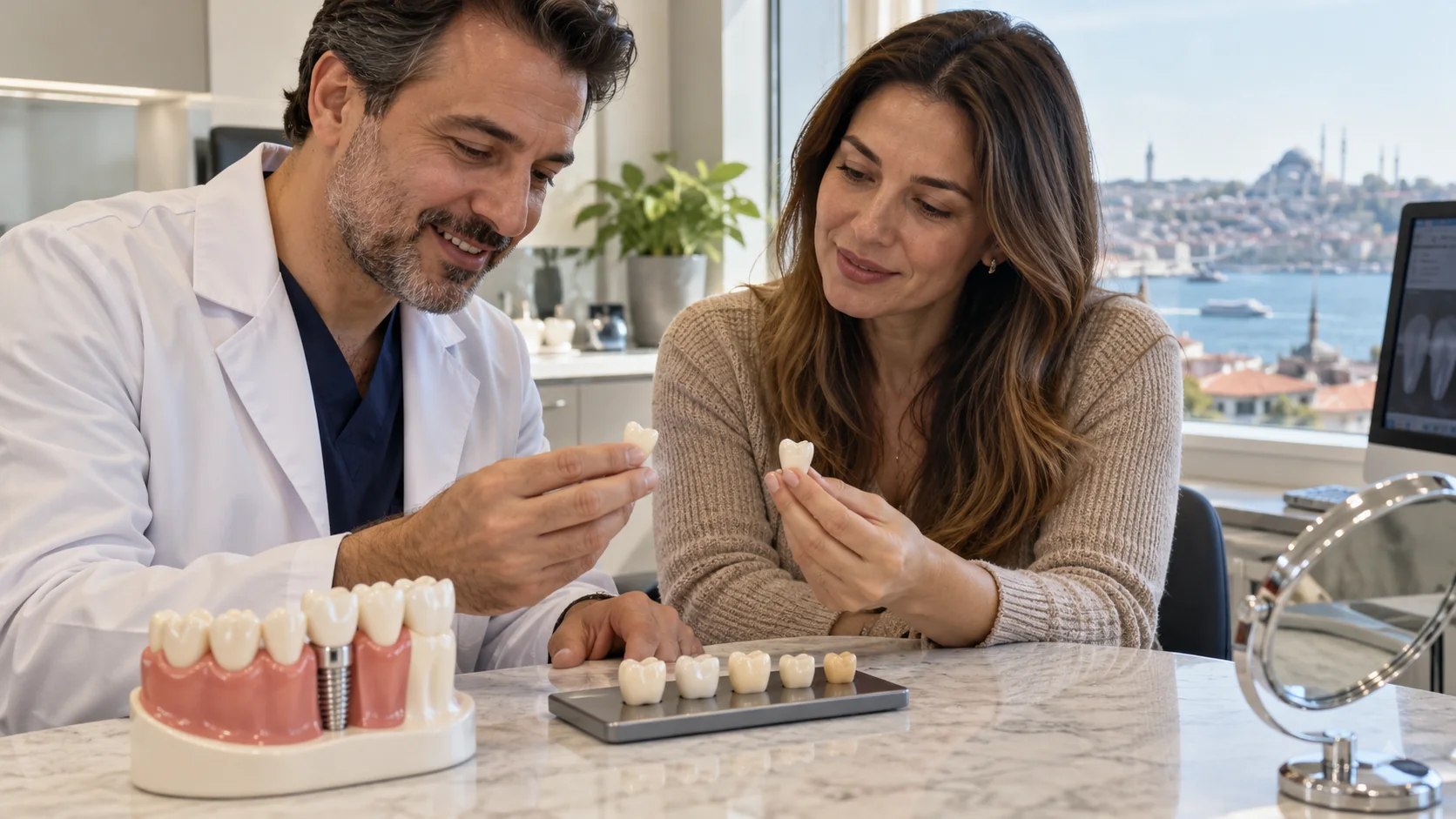
How does a zirconia crown connect to the implant?
The visible crown is only one part of the complete implant restoration.
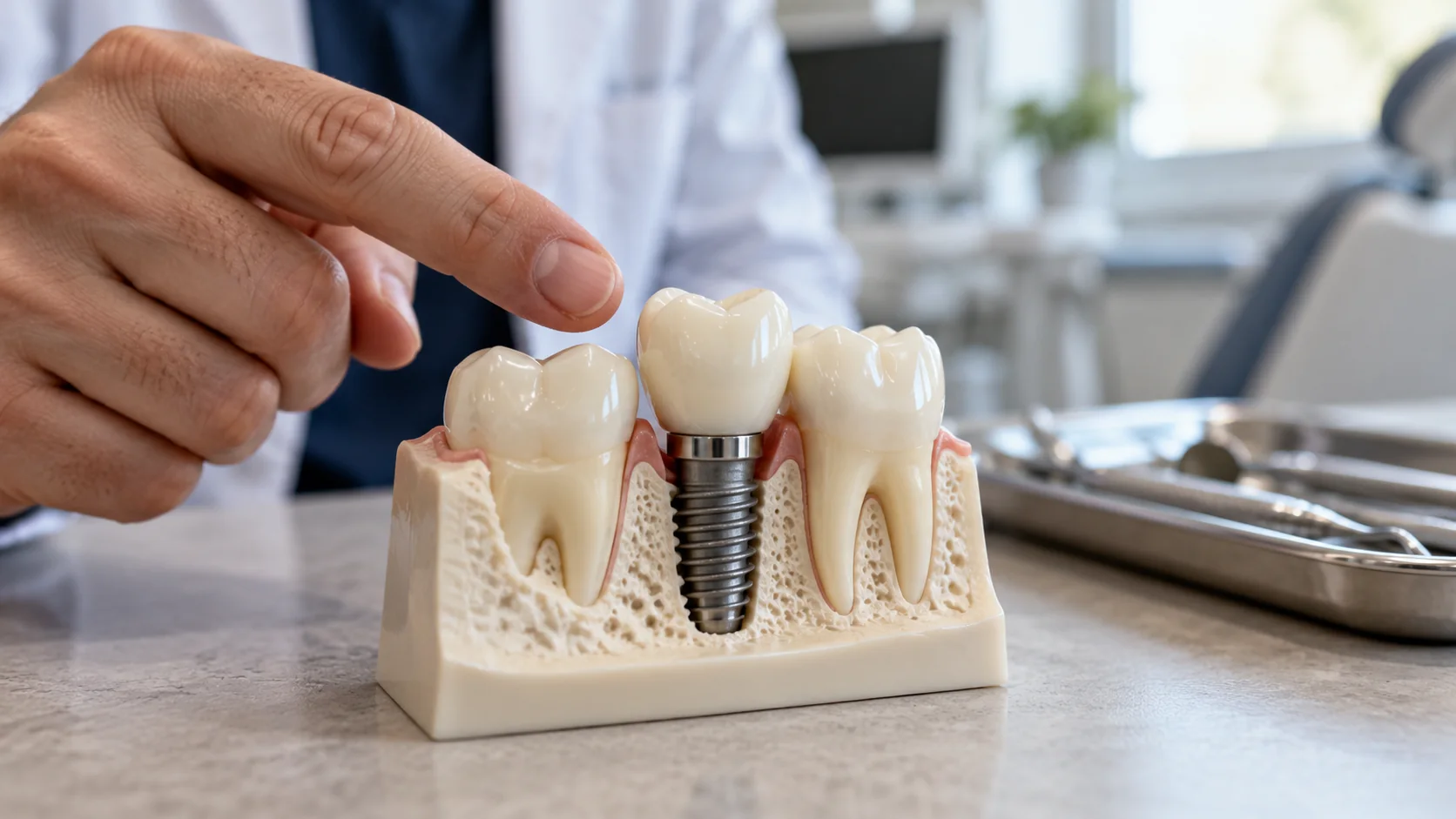
- The dental implant is anchored within the jawbone.
- A restorative connection sits above the implant.
- The zirconia crown forms the visible replacement tooth.
- The crown may be screw-retained or cemented according to the restorative design.
- The dentist checks the fit, contacts and bite before completion.
- The restoration must allow appropriate cleaning around the implant.
For a comparison of restorative materials, see zirconia vs porcelain crowns on dental implants.
When is a zirconium crown fitted after implant placement?
The final crown is normally fitted after the dentist confirms that the implant is sufficiently healed and stable for the definitive restoration.
The timing is individual. A temporary tooth can sometimes be provided earlier, but an early temporary restoration should not automatically be confused with the final zirconia crown.
- The dental implant is placed into the jawbone.
- The implant is given time to heal and integrate.
- The dentist reassesses implant stability and the surrounding tissues.
- A digital scan or impression is taken for the final restoration.
- The zirconia crown is designed and produced.
- The crown is fitted and the bite is checked.
Read when a crown can be fitted after implant placement and what happens between implant placement and the final crown.

Zirconia vs porcelain crowns on dental implants
Both terms are commonly encountered when choosing implant restorations, but the material and laboratory design may differ.
Zirconia implant crown
Zirconia is a strong tooth-coloured ceramic commonly used for implant crowns and bridges.
- High-strength ceramic
- Metal-free appearance
- Can be digitally designed
- Used for front or back implant restorations depending on the case
Porcelain-based restoration
Porcelain can be used in different restorative designs and may be selected according to the required aesthetics, support material and position of the restoration.
- Different porcelain systems are available
- Aesthetic properties vary by design
- Strength depends on the restorative system
- The best choice depends on bite and location
Can zirconia implant crowns look natural?
A natural-looking implant tooth depends on much more than simply choosing a white ceramic material.
The crown needs to work with the surrounding teeth, gum line, implant position and your bite.
- Shade should be selected to match neighbouring teeth rather than being unnecessarily bright.
- Crown width and length should fit the space naturally.
- The tooth shape should be appropriate for its position in the smile.
- The contact points with neighbouring teeth need to be carefully designed.
- The gum profile around the implant affects the final appearance.
- The bite needs to be checked so the crown is not overloaded.
Where can zirconia be used with dental implants?
The restorative design changes according to how many teeth need to be replaced.
Single implant crown
One dental implant can support an individual zirconia crown for a single missing tooth.
Multiple implant restorations
Separate zirconia crowns or an implant-supported bridge may be considered when several teeth are missing.
Full-arch restorations
Zirconia may also be considered as part of a final full-arch implant restoration depending on the laboratory and restorative plan.
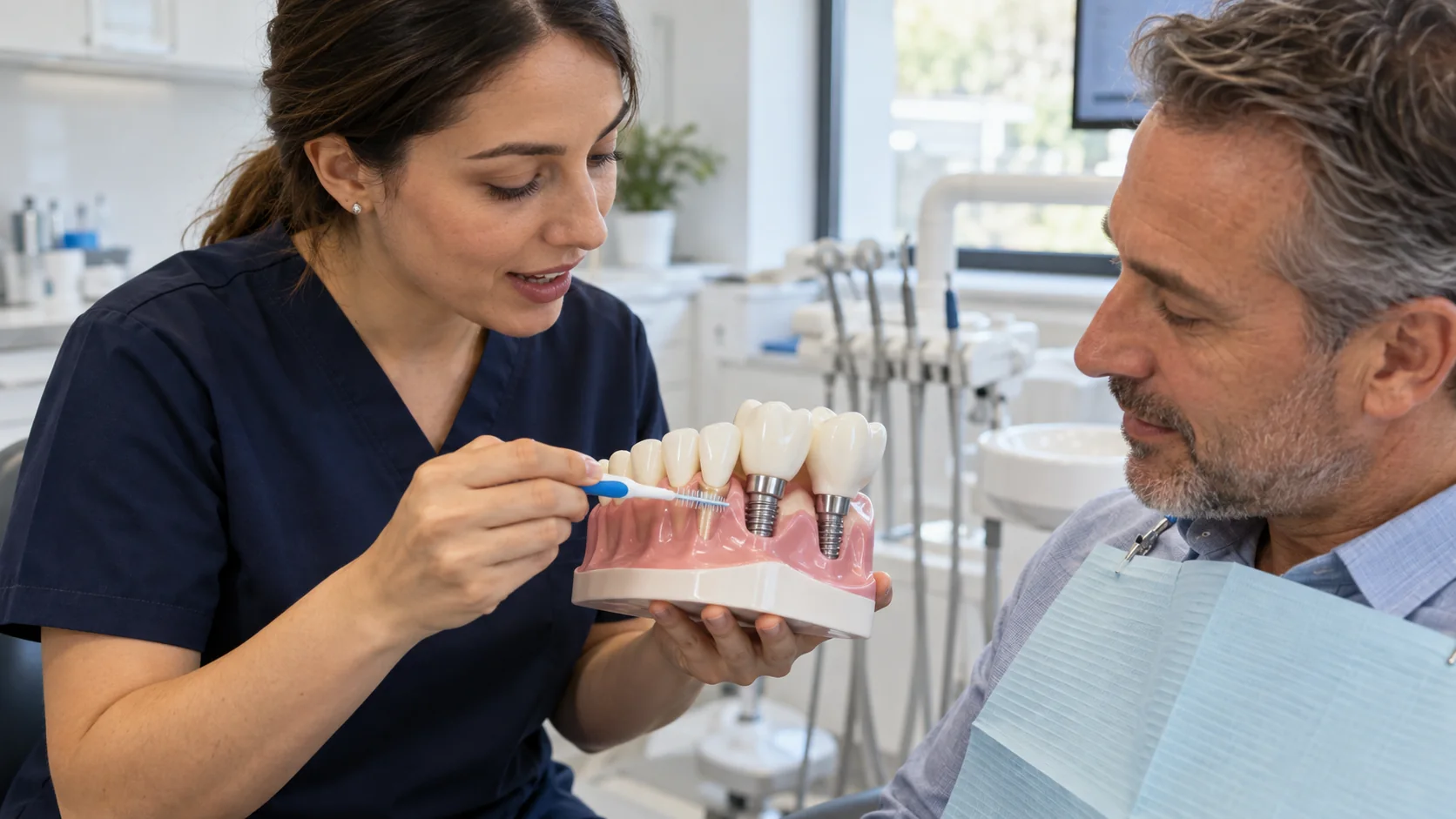
How do you clean zirconium crowns on implants?
The zirconia crown cannot develop tooth decay in the same way as a natural tooth, but the gum and bone surrounding the implant still need daily care.
- Brush around the implant crown twice daily.
- Clean between the crown and neighbouring teeth.
- Use interdental cleaning aids recommended for your restoration.
- Keep the gum margin around the implant clean.
- Attend professional dental and hygiene reviews.
- Do not use an implant crown to crack ice or very hard objects.
- Contact your dentist if the crown feels loose or the surrounding gum remains inflamed.
Read how to clean and care for dental implants and how long dental implants last.
What affects the cost of zirconia crowns on implants?
The final implant crown is only one part of the total implant treatment price.
Your quote can differ depending on whether you already have a healed implant or need the complete implant procedure from surgery through to the final crown.
See dental implant cost Turkey for the broader pricing guide.
Questions to ask about zirconia implant crowns
The final crown should be planned as carefully as the implant underneath it.
- Is zirconia suitable for this implant position?
- When will my implant be ready for the final crown?
- Will I have a temporary crown while the implant heals?
- How will you match the colour to my surrounding teeth?
- Is the crown screw-retained or cemented?
- How will the bite be checked?
- Can I clean easily around the final crown?
- What should I do if the crown ever feels loose?
- Is zirconia or another porcelain restoration better for my case?
- What is included in the price of the final restoration?
Zirconium crowns on implants: frequently asked questions
Common questions about zirconia implant crowns, fitting time, materials and maintenance.
What is a zirconium crown on an implant?
A zirconium or zirconia implant crown is the tooth-coloured ceramic restoration fitted above a dental implant. The implant remains in the jawbone while the crown forms the visible replacement tooth.
Is zirconium the same as zirconia?
Patients commonly use the term zirconium crown, while dental ceramic crowns are generally made from zirconia, or zirconium dioxide. The terms are often used interchangeably in everyday dental discussions.
When can a zirconia crown be fitted after implant surgery?
The final crown is fitted after the dentist confirms that the implant has healed sufficiently and is stable enough for the planned restoration. The exact timing varies between patients.
Can I get a temporary crown before the final zirconia crown?
Sometimes. A temporary restoration may be used during healing when the implant position and treatment plan allow it. The final zirconia crown is normally completed later.
Are zirconia crowns strong?
Zirconia is a high-strength dental ceramic used for implant crowns and bridges. The durability of the final restoration also depends on its design, bite forces, implant position and long-term care.
Do zirconia implant crowns look natural?
They can. The final appearance depends on shade selection, crown shape, gum position, implant placement and how the restoration fits with neighbouring teeth.
Is zirconia better than porcelain for implant crowns?
There is no single material that is best for every implant. Zirconia and porcelain-based restorations have different properties, and the dentist selects the restoration according to position, aesthetics, bite and treatment design.
Can zirconia crowns stain?
The ceramic itself is relatively resistant to staining compared with natural tooth structure, but plaque and surface deposits can still collect around the restoration, so daily cleaning remains important.
Can a zirconia implant crown be replaced?
If the crown becomes damaged or needs replacement, the dentist first assesses the crown, connection and implant. In some cases the restoration can be replaced while the implant itself remains in place.
Ask which implant crown material suits your smile
If you are planning dental implants in Turkey or already have implants that need final crowns, send us your X-ray, scan or treatment information. The dental team can review the implant positions and explain the restorative options, including zirconia crowns and implant bridges.