
How Long Do Dental Implants Last?
Dental implants are designed as a long-term replacement for missing teeth and can remain in function for many years or even decades. Long-term studies consistently show high implant survival, but no dentist can guarantee that every implant will last for life.
It is also important to separate the implant fixture in the jawbone from the crown, bridge or full-arch restoration attached to it. The implant may remain healthy while the visible teeth eventually need repair or replacement because of normal wear.
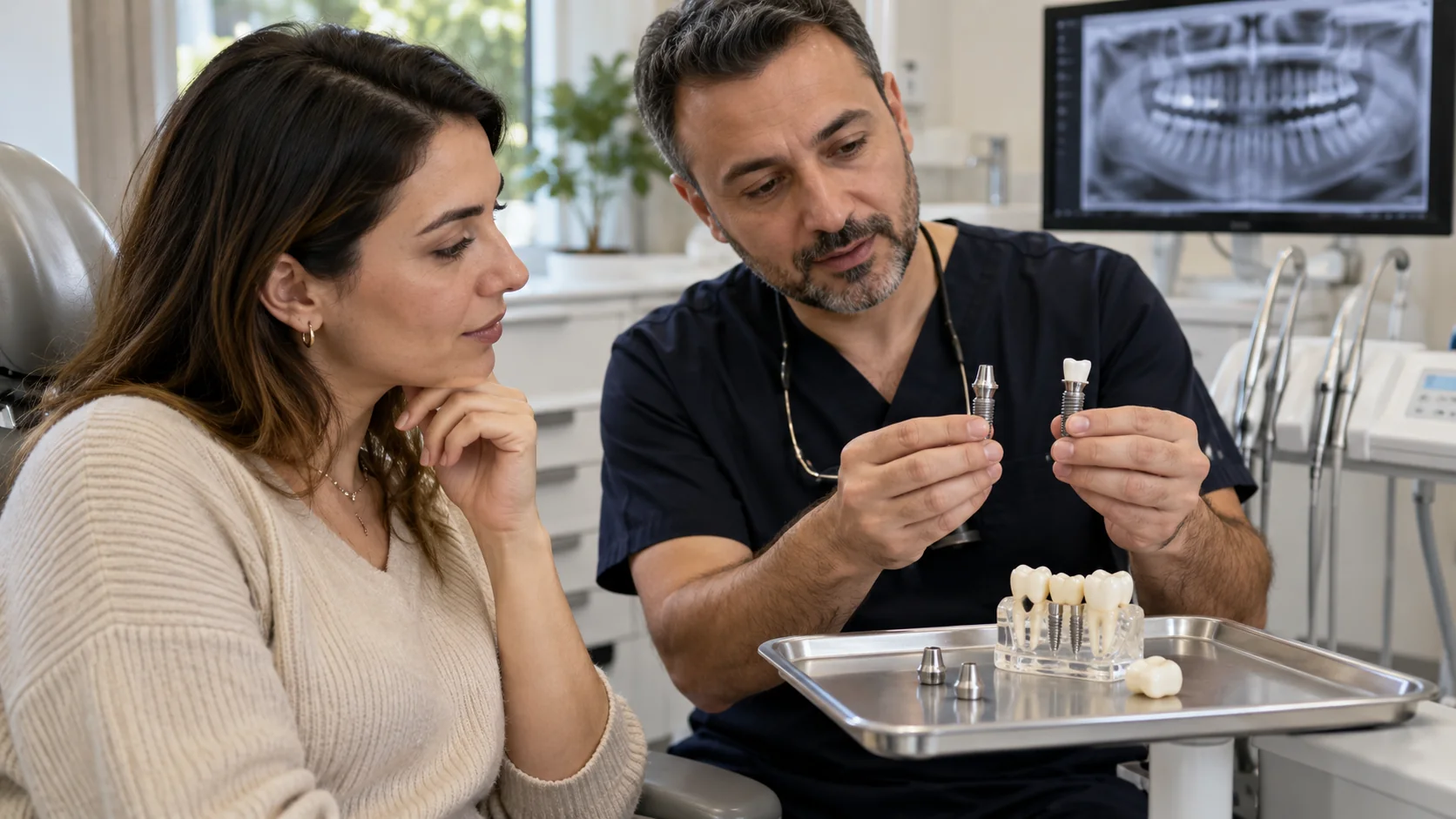
Can dental implants last a lifetime?
They can last for decades, and some implants remain functional for the rest of a patient’s life. However, “lifetime” should not be presented as a guarantee. Long-term implant survival is influenced by biological, mechanical and lifestyle factors.
-
✓
10-year survival is high Systematic reviews of modern implant systems have reported survival above 90% at 10 years.
-
✓
Implants can remain functional beyond 20 years Long-term studies demonstrate that many implants continue to function successfully for decades.
-
✓
The crown may not last as long as the implant The visible restoration can wear, chip or require replacement while the implant fixture remains integrated.
-
✓
Maintenance matters Daily plaque control and regular dental reviews are important throughout the life of the implant.
Implant lifespan vs crown lifespan
When people ask how long a dental implant lasts, they often mean the whole replacement tooth. In reality, an implant restoration contains several separate components that can have different maintenance needs.
The implant fixture
The titanium implant sits inside the jawbone and replaces the missing tooth root. Once successfully integrated, it may remain in place for many years or decades if the surrounding bone and gum stay healthy.
The abutment
The abutment connects the implant to the crown or bridge. Mechanical complications can occasionally affect screws or connections without meaning that the implant itself has failed.
The crown or bridge
The visible restoration receives daily chewing forces and normal wear. Crowns and bridges may eventually require polishing, repair, screw adjustment or replacement while the underlying implant remains healthy.
What do long-term dental implant studies show?
Survival statistics vary between studies because patient health, implant systems, locations and follow-up methods differ. Still, the overall evidence supports dental implants as a highly durable treatment.
High long-term survival
A systematic review of contemporary implant systems reported a conventional 10-year survival estimate of approximately 96%, with a more conservative sensitivity estimate around 93%.
Many implants remain functional
A recent systematic review and meta-analysis of prospective studies estimated approximately 93% implant survival after at least 20 years of follow-up.
Survival is not a guarantee
Long-term survival rates describe groups of patients. They cannot predict exactly how long an individual implant will last, and an implant can survive while still requiring maintenance or treatment.
Factors that affect how long dental implants last
Implant longevity is not controlled by one factor alone. The health of the tissues around the implant and the forces placed on the restoration both matter.
Oral hygiene
Plaque around the gumline can cause inflammation around implants. Daily brushing and cleaning between or underneath implant restorations are essential.
Smoking
Smoking is associated with poorer healing and increased implant-related risk. Long-term implant maintenance is more predictable when smoking is avoided.
Gum disease history
Patients with a history of periodontitis need particularly careful maintenance because previous periodontal disease is associated with greater long-term implant risk.
Diabetes control
Well-controlled diabetes can be compatible with successful implant treatment, while poor glycemic control may make healing and peri-implant health less predictable.
Grinding and clenching
Bruxism can place substantial mechanical stress on implant crowns, bridges, screws and full-arch restorations.
Implant and restoration design
Implant position, available bone, crown design, bite contacts and restorative materials all influence how forces are transferred during chewing.
How to make dental implants last as long as possible
You cannot control every biological factor, but daily habits and professional maintenance can reduce preventable problems around dental implants.
The goal is to protect both sides of the treatment: the biological foundation of gum and bone and the mechanical restoration used for chewing.
- Brush implant crowns and the surrounding gumline carefully twice a day.
- Clean between implants and underneath implant bridges or full-arch teeth every day.
- Attend professional check-ups and hygiene appointments at the interval recommended for your risk level.
- Avoid smoking and discuss cessation support if needed.
- Keep diabetes and other relevant medical conditions appropriately managed.
- If you grind or clench, ask whether a protective night guard is appropriate.
- Do not use implant crowns to crack nuts, chew ice or open packaging.
- Have persistent bleeding, swelling, bad taste or movement checked early rather than waiting.
Full guide: How to Clean and Care for Dental Implants.
What can shorten dental implant lifespan?
Dental implant loss is usually multifactorial. Biological complications affect the tissues around the implant, while mechanical complications affect the restoration and its components.
Peri-implant disease
Inflammation can begin in the soft tissue around an implant and, if it progresses, may involve the supporting bone. Long-term plaque control and early treatment are therefore important.
Excessive mechanical load
Heavy bite forces, clenching, poorly controlled contacts or trauma can contribute to screw loosening, ceramic damage or other restorative complications.
Smoking and medical risk factors
Smoking and poorly controlled systemic conditions can affect healing or peri-implant health and may alter the long-term prognosis.
Insufficient maintenance
Implants should not be treated as “fit and forget” devices. They require continued home cleaning and professional monitoring throughout their lifespan.
Does replacing the crown mean the implant failed?
No. A crown, bridge or full-arch prosthesis can require repair or replacement even when the implant underneath remains firmly integrated and healthy.
This is similar to replacing a component on a long-lasting structure rather than replacing the entire foundation.
For single implants, long-term research shows that some original crowns are replaced during follow-up even while most implants remain in function.
- A crown can chip or fracture while the implant remains stable.
- A screw can loosen and require adjustment or replacement.
- Normal wear can change the bite or appearance over many years.
- The gumline can change with age and alter the appearance of the crown.
- A full-arch restoration may need maintenance even if all supporting implants remain healthy.
- Restorative maintenance is part of implant dentistry and does not automatically mean implant failure.
Do all types of dental implants last the same amount of time?
The biological implant may be similar, but the number of implants, restoration design and forces placed on the prosthesis vary substantially between treatment types.
Single implant crown
One implant supports one crown. Long-term maintenance may involve the crown or abutment without necessarily requiring replacement of the implant fixture.
Implant-supported bridge
Several missing teeth can be restored using a bridge supported by multiple implants. Cleaning underneath the bridge and managing bite forces are important for long-term maintenance.
All-on-4 and All-on-6
Full-arch treatment uses several implants to support an entire fixed set of teeth. The implants may remain healthy for many years while the full-arch prosthesis itself requires periodic maintenance.
Compare All-on-4 vs All-on-6 Dental Implants.
Why regular dental implant check-ups matter
A dental implant can feel completely normal while early gum inflammation or mechanical wear is developing. Regular reviews allow small problems to be identified before they become larger ones.
What your dentist may check
The dental team can assess the gums around the implant, plaque control, bite, stability of the crown or bridge and whether screws or components show signs of wear.
Radiographs may be taken when clinically appropriate to monitor the bone around the implant.
Your maintenance schedule should be individual
Someone with healthy gums, excellent cleaning and low risk may need a different recall interval from a smoker, a patient with previous periodontal disease or someone with a large full-arch restoration.
Long-term follow-up should continue even when implants have been functioning successfully for many years.
Dental implant lifespan questions
Common questions about implant longevity, crown replacement and long-term maintenance.
How many years do dental implants usually last?
Dental implants can remain functional for decades. Long-term studies show high survival beyond 10 years and many implants remain in function beyond 20 years. Individual lifespan varies, so no exact number can be guaranteed.
Can dental implants last 20 years?
Yes. Long-term clinical studies include many implants that remain functional for 20 years or longer. A recent meta-analysis of prospective studies estimated approximately 93% implant survival at 20 years.
Can dental implants last a lifetime?
Some implants may last for the remainder of a patient’s life, but this cannot be promised. Gum and bone health, cleaning, smoking, general health and mechanical forces all influence longevity.
How often do dental implant crowns need replacing?
There is no fixed replacement schedule. Some implant crowns remain functional for many years, while others eventually need repair or replacement because of wear, chipping, fracture, screw problems or changes in the surrounding tissues.
Does replacing an implant crown mean the implant failed?
No. The crown is a separate restorative component. It can be repaired or replaced while the implant fixture in the jaw remains healthy and integrated.
Do zirconia implant crowns last longer?
Zirconia is highly durable, but crown longevity depends on much more than material alone. Bite forces, crown design, implant position, grinding habits and maintenance all influence the result.
Can smoking shorten dental implant lifespan?
Yes. Smoking is associated with poorer implant healing and a greater risk of biological complications. Avoiding smoking supports more favorable long-term implant health.
Can gum disease cause an implant to fail years later?
Inflammatory disease can affect the tissues around an implant even years after placement. If supporting bone is progressively lost, implant stability can eventually be threatened.
What are signs an old dental implant needs checking?
Persistent bleeding, swelling, tenderness, bad taste, gum recession, changes in the bite, clicking, movement of the crown or movement of the implant itself should be professionally assessed.
Do dental implants need check-ups forever?
Long-term professional monitoring is recommended. Even an implant that has functioned well for many years should continue to be checked because biological and mechanical changes can develop over time.
Planning dental implants that are easier to maintain for years
Long-term implant treatment starts with proper planning and continues with good home care and professional maintenance. If you are considering dental implants in Turkey, ask about the implant system, restoration material, cleaning requirements and long-term follow-up plan.
- 1Long-term implant planning
- 2Crown and bridge material options
- 3Maintenance and cleaning guidance
- 4Single tooth and full-arch solutions
This page provides general educational information and does not guarantee the lifespan of an individual implant. Research references: PubMed — 10-Year Dental Implant Survival, PubMed — 20-Year Implant Survival, PubMed — Long-Term Single Implant and Crown Survival.