Dental Implants for Seniors Turkey
Dental implants for seniors in Turkey can be considered for older adults who have one missing tooth, several missing teeth, loose dentures or extensive tooth loss. Age alone does not determine whether implant treatment is suitable.
The more important questions are your general health, jawbone, gums, medicines and the type of teeth that need replacing. A dental examination and 3D scan help determine which implant approach may be appropriate.
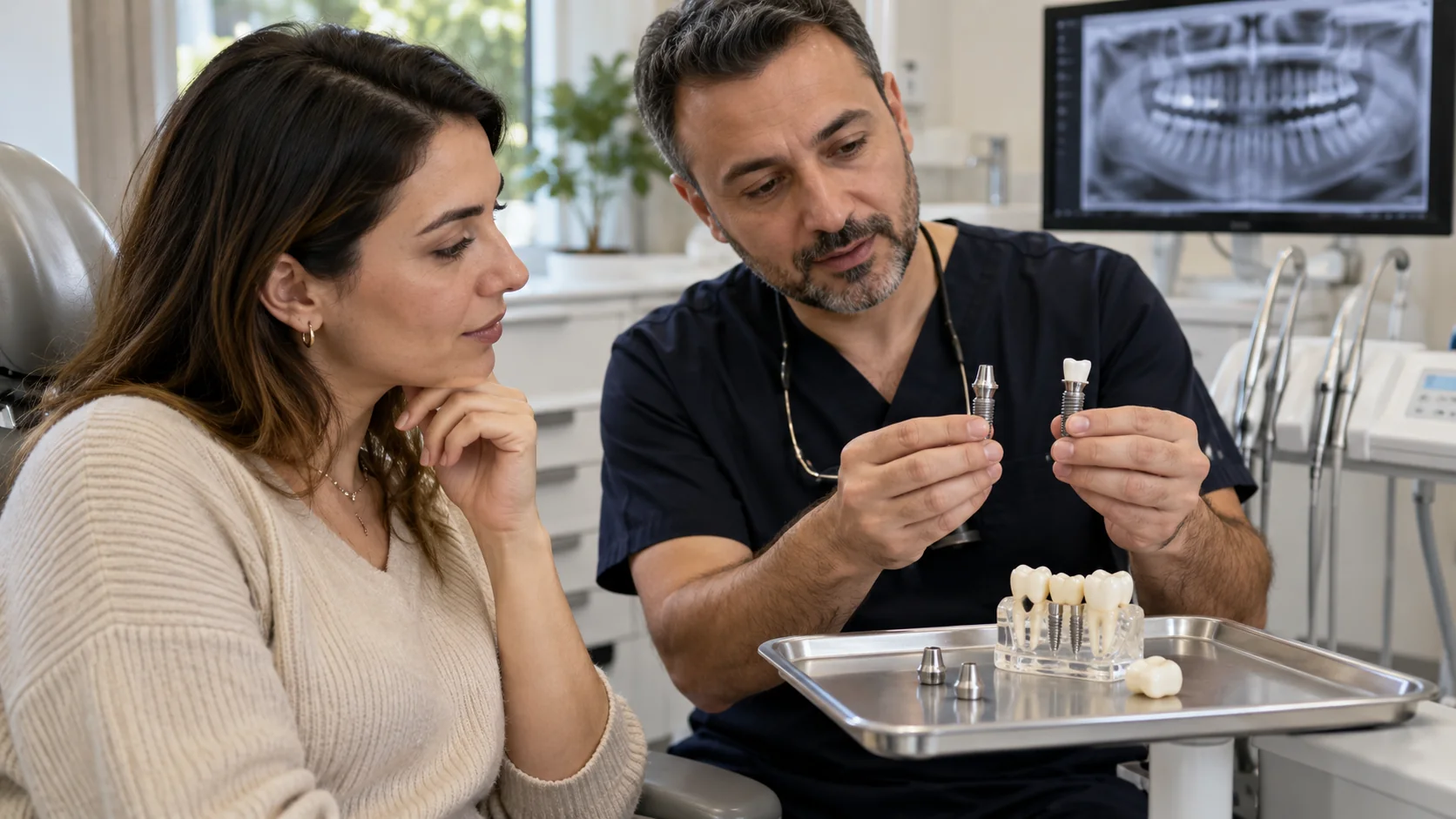
General health, bone, gums and medicines matter more than the number on your birthday.
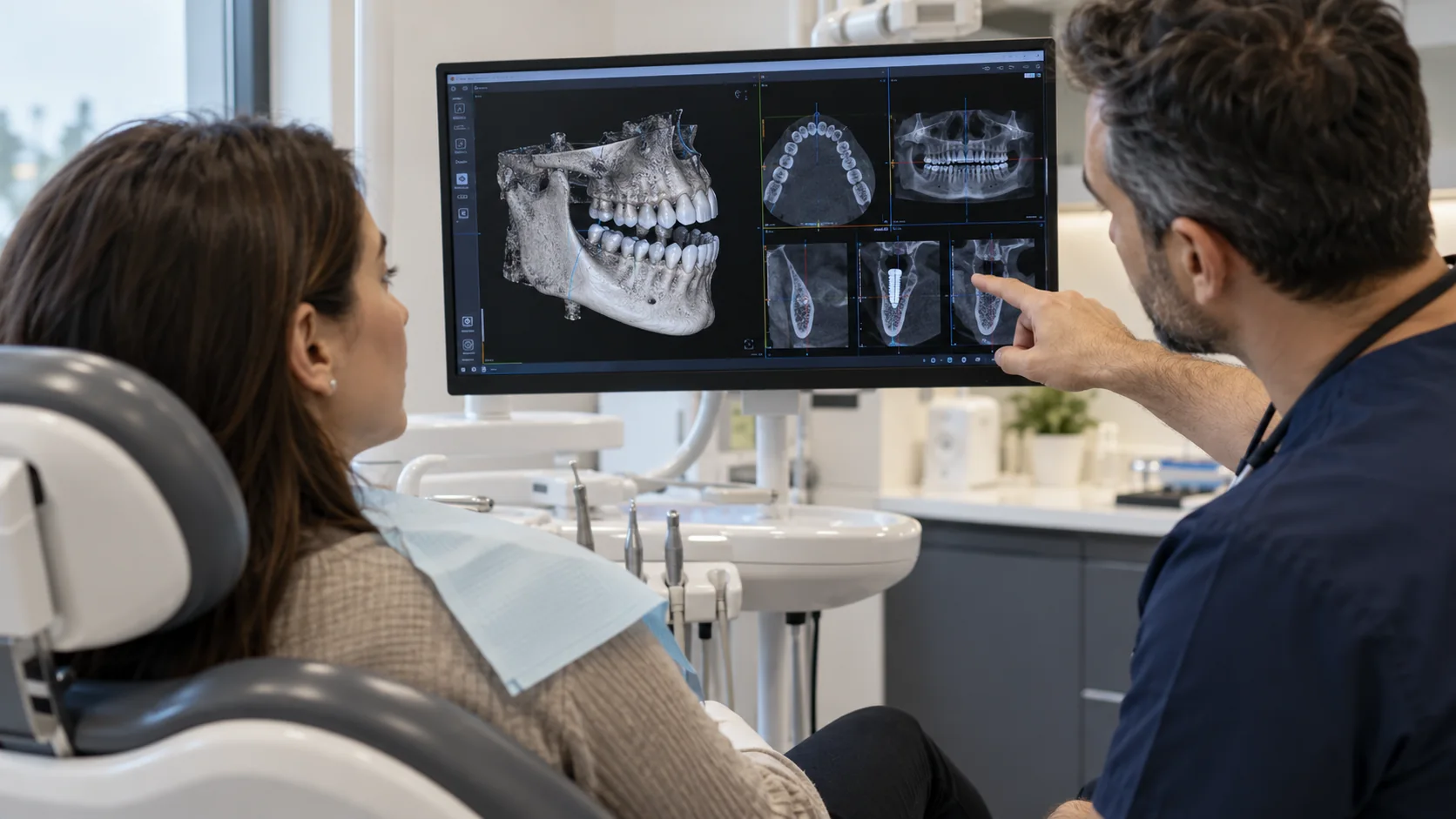
Are You Too Old for Dental Implants?
There is not a simple age at which someone automatically becomes too old for dental implants.
For an older adult, the dentist looks at whether implant surgery is appropriate for the person’s overall health and whether the jaw and gums can support the proposed treatment.
This means a healthy person over 65 may still be considered for implants, while a younger patient with uncontrolled health or oral problems may need those issues addressed before treatment.
What Is Checked Before Dental Implants for Seniors?
The consultation needs to consider the whole patient—not only the missing tooth.
General Health
Medical history is reviewed to understand whether implant surgery is appropriate and whether additional information is needed before treatment.
Medicines
Tell the dentist about prescription medicines and other medication you take so they can be considered during treatment planning.
Jawbone
The amount and location of available bone are assessed to determine where implants may be placed.
Gum Health
Healthy gums are important around implants, so active gum problems may need treatment before implant surgery.
Missing Teeth
The dentist considers whether you need one implant, several implants, an implant-supported denture or a fixed full arch.
Daily Cleaning
Your final restoration should be something you can maintain with realistic daily cleaning and professional reviews.
Health and Medicines Before Implant Surgery
For seniors, discussing health conditions and medication is part of the dental implant consultation.
Do not stop or change prescribed medication on your own because you are planning dental treatment. Instead, provide the dental team with an accurate medical and medication history so the treatment can be assessed appropriately.
Include prescription medicines and relevant medical information when discussing dental implant surgery.
Conditions such as diabetes should be discussed before treatment rather than only on the day of surgery.
Some implant plans involve surgery, several months of healing and a later visit for the final teeth.
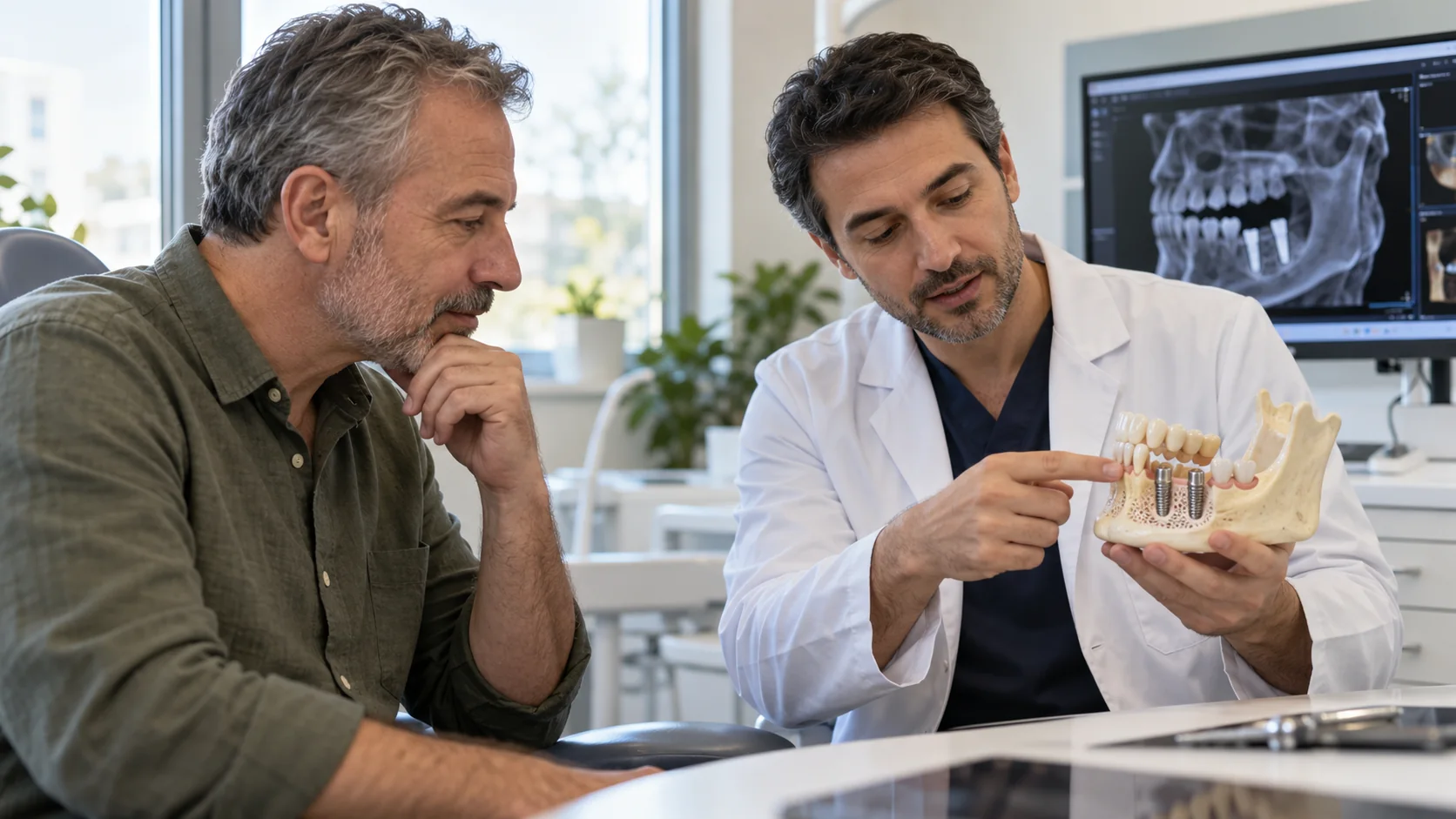
Can Seniors Get Dental Implants with Bone Loss?
Often, bone loss does not automatically rule out implant treatment.
The important question is how much bone remains and where it is located. A 3D scan allows the dentist to assess the intended implant sites and the nearby anatomical structures.
Depending on the case, treatment may involve a bone graft, a sinus lift or another implant arrangement that makes use of the bone already available.
The location and amount of remaining bone must be assessed before deciding whether grafting or another implant approach is appropriate.
Dental Implants for Seniors Who Wear Dentures
Existing denture wearers may still be candidates for dental implant treatment.
Implants can be used to help hold a denture more securely, or a patient may be assessed for fixed implant-supported teeth depending on the jawbone and overall treatment plan.
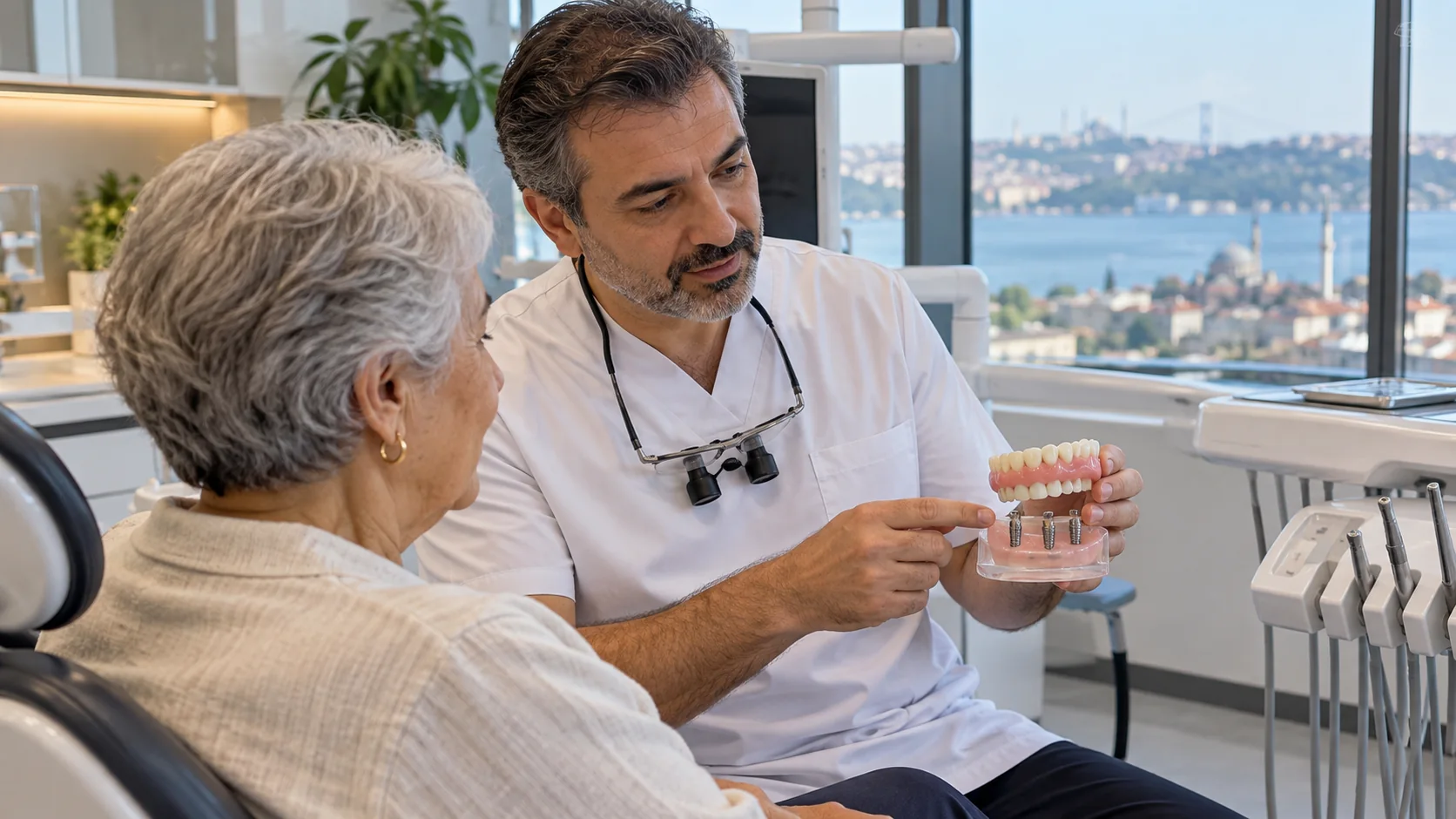
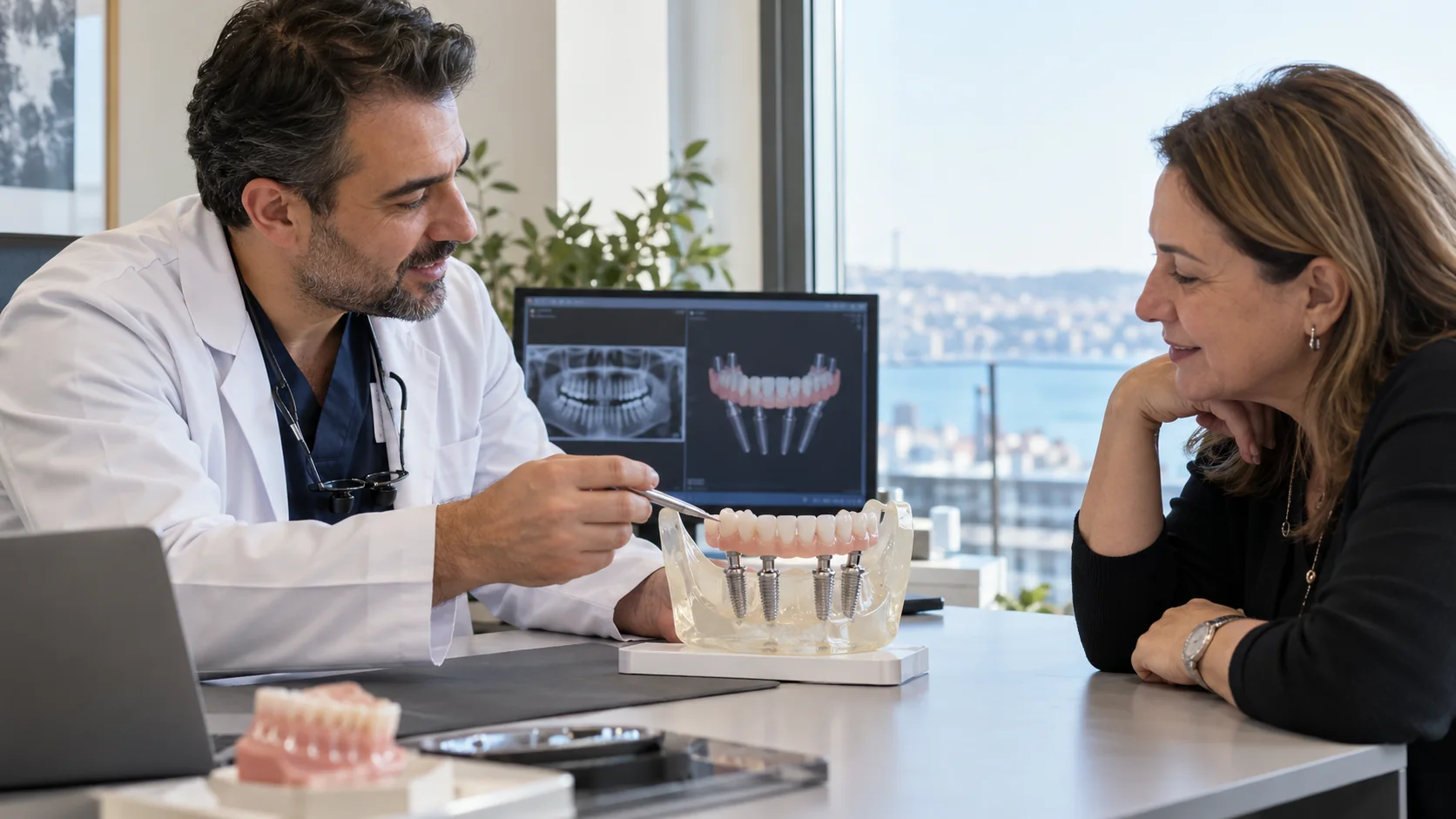
Full Mouth Dental Implants for Seniors
When most or all teeth are missing or failing, treatment may focus on restoring an entire arch rather than placing an implant for every missing tooth.
Several implants can support a fixed upper or lower arch. The treatment plan depends on available bone, bite and the type of final restoration being planned.
Options can include All-on-4, All-on-6 and other full-arch implant arrangements.
- Upper jaw, lower jaw or both jaws can be assessed.
- The number of implants depends on the planned full-arch treatment.
- Bone distribution influences implant positions.
- Temporary teeth may be possible in suitable cases.
- The final bridge follows the required healing and restorative stages.
Can Seniors with Diabetes Get Dental Implants?
Having diabetes does not automatically mean that implant treatment is impossible.
The source material used for this site notes that when diabetes is well controlled, implants can often be considered and that the dentist may ask about recent blood sugar results before planning surgery.
Because individual medical circumstances differ, diabetes should be discussed directly during the implant assessment.
Provide accurate health information and any relevant recent medical results requested by the treating team.
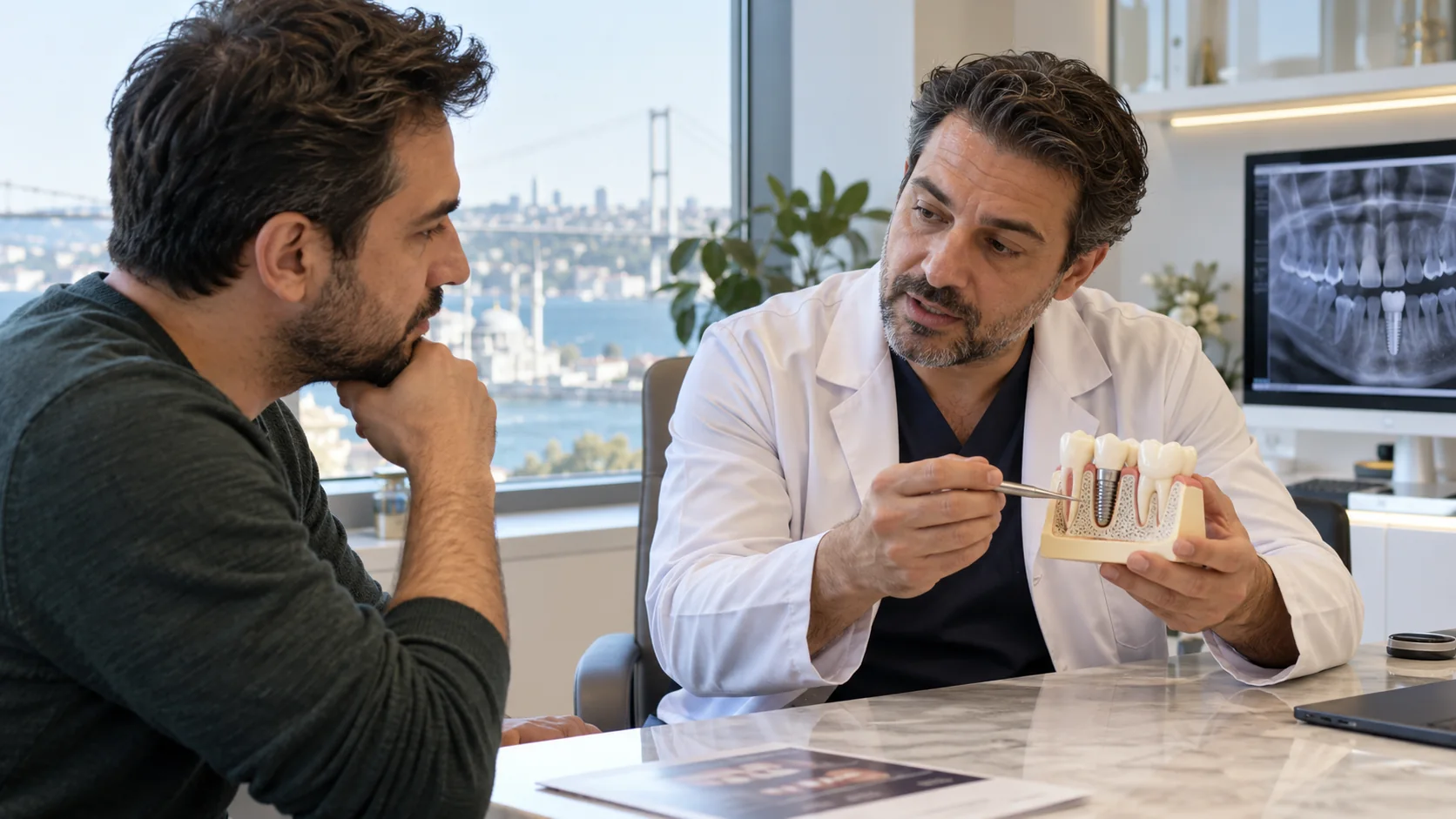
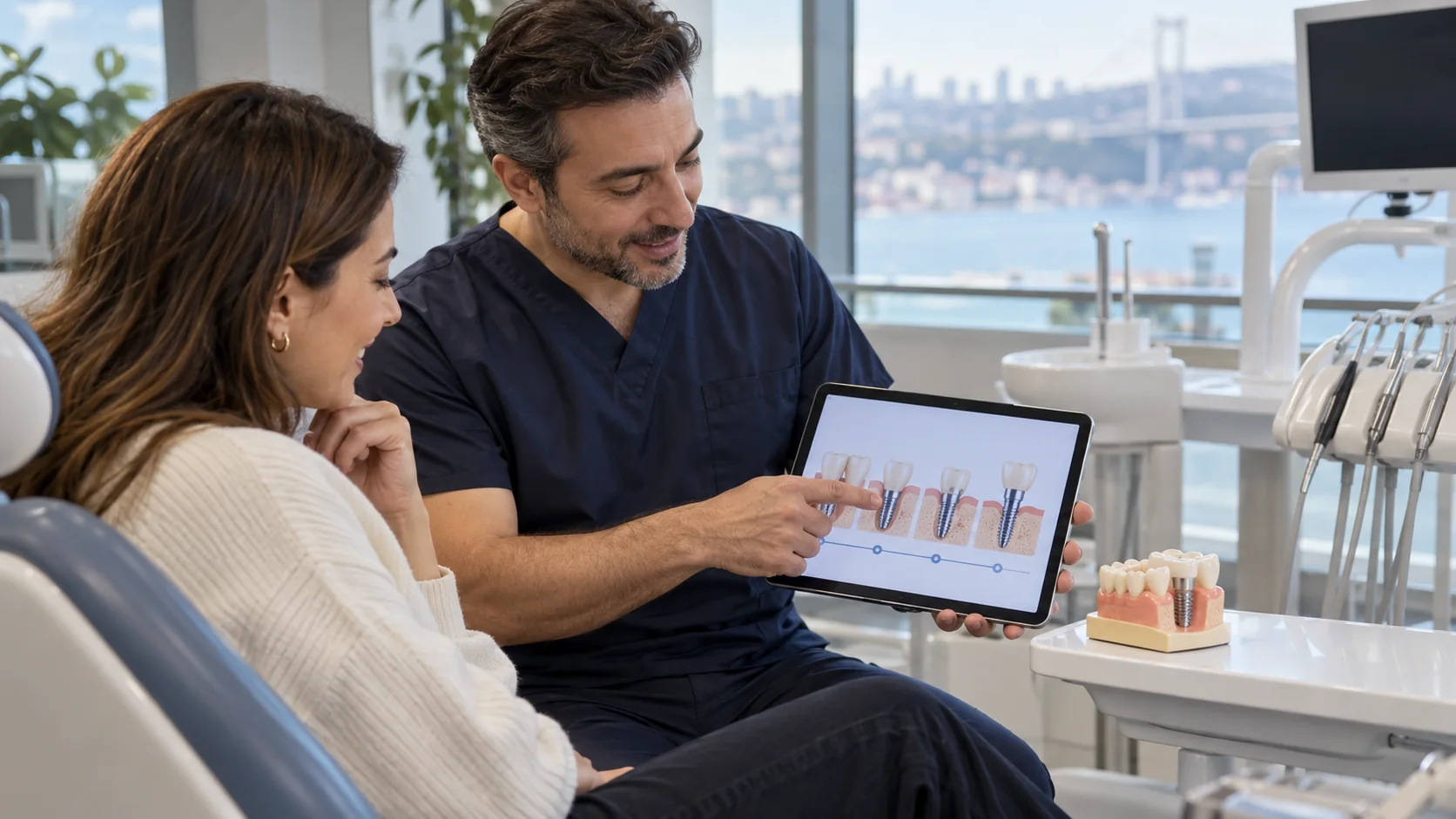
Dental Implant Recovery for Seniors
Implant recovery includes both the first days after surgery and the longer period while the jawbone heals around the implants.
Follow the clinic’s instructions for food, cleaning and the surgical area.
Cool and soft foods are used initially, followed by a gradual return toward a more normal diet as advised.
The implants continue healing within the jawbone over the following months.
The final crown, bridge or full arch is completed according to the planned healing and restorative schedule.
Can Seniors Clean Dental Implants Easily?
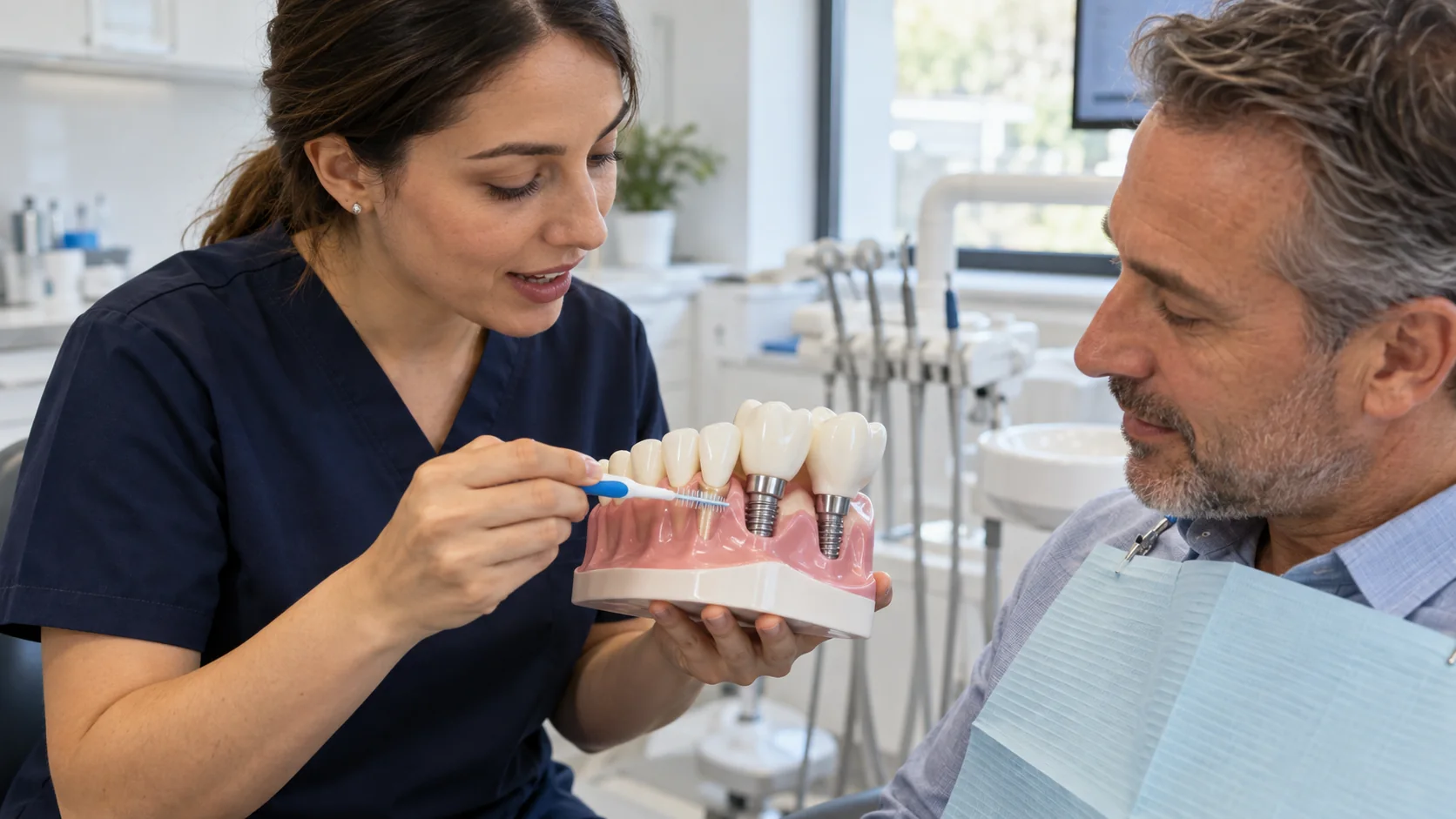
Long-term implant treatment still requires daily cleaning, even when the teeth are fixed in place.
The design of the final crown, bridge, implant-supported denture or full arch should be accompanied by clear instructions about how to keep the implant areas clean.
Daily brushing remains part of implant maintenance.
Interdental brushes or other recommended aids can help clean areas a normal brush cannot reach.
Fixed implant bridges require cleaning beneath and around the restoration.
Regular professional checks remain important after treatment is completed.
Travelling to Turkey for Dental Implants as a Senior
If you are travelling for implant treatment, ask for the sequence of treatment before booking your trip.
Traditional dental implant treatment usually includes a surgical visit, a healing period at home and a later visit for the final teeth.
- How many visits will I need?
- How long should each stay be?
- Which medicines should I tell the dentist about?
- Do I need a bone graft?
- Will I have temporary teeth?
- What should I eat after surgery?
- How is follow-up handled from home?
- When will my final teeth be fitted?
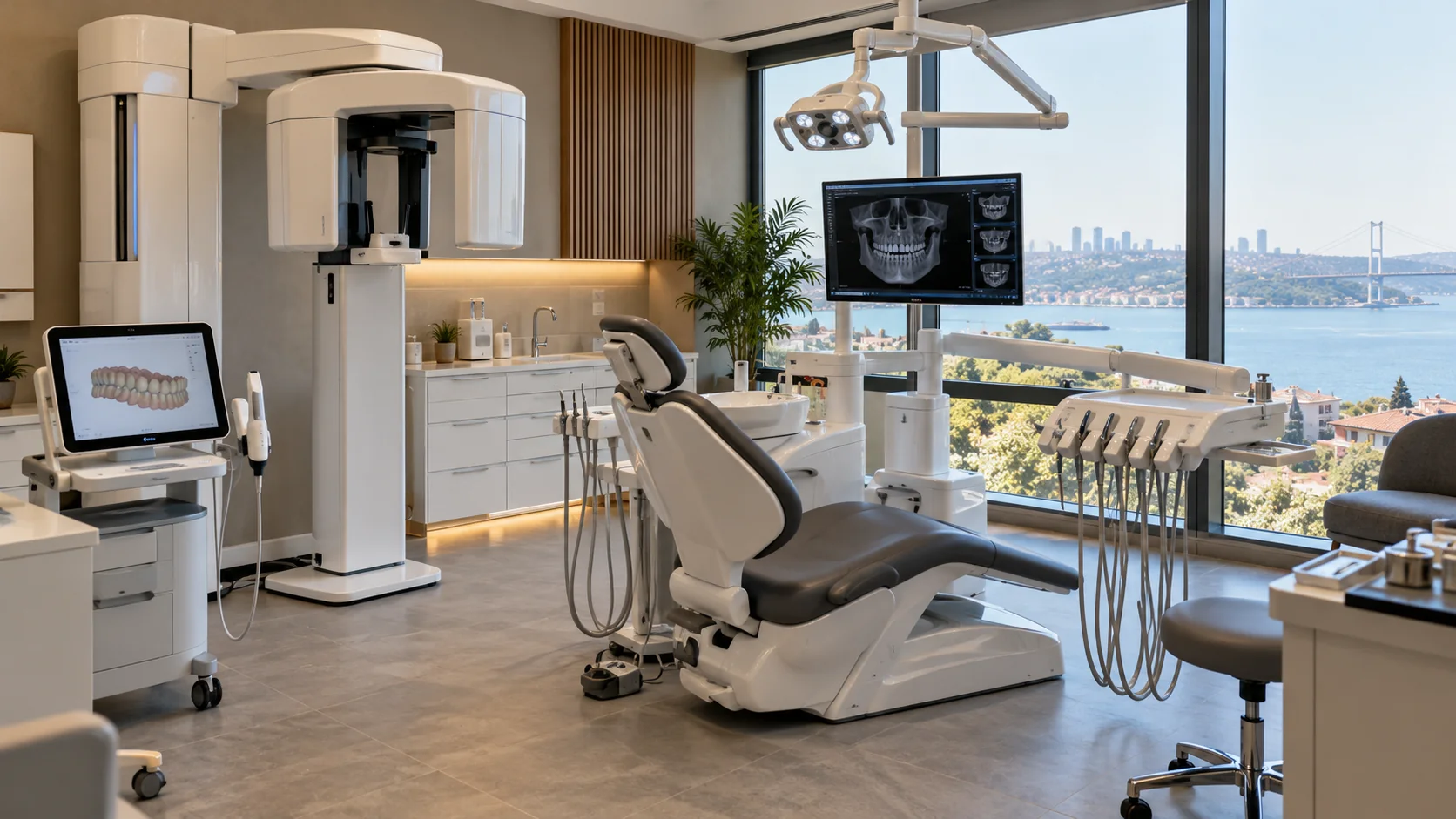
Dental Implants for Seniors Turkey Cost
There is no separate universal dental implant price simply because a patient is older.
The cost depends on the treatment required: the number of implants, type of restoration, implant system and whether additional procedures are needed.
Ask for a Personal Senior Implant Plan
A useful quotation should be based on the actual dental and medical assessment rather than age alone.
- Number and location of missing teeth
- Current denture use
- Available jawbone
- Implant system
- Bone graft or sinus lift if needed
- Temporary teeth if appropriate
- Final crown, bridge or full arch
- Expected treatment stages
Dental Implants for Seniors Turkey: Common Questions
Common questions about age, dentures, bone loss, diabetes, recovery and full-mouth implant treatment.
Can I get dental implants if I am over 65?
Often, yes. Age alone is rarely the deciding factor. General health, available bone, gum condition and the medicines you take matter more during treatment planning.
Is there an upper age limit for dental implants?
The treatment should be assessed individually rather than using age alone as the deciding factor. Your dentist reviews health, bone, gums, medicines and the proposed implant treatment.
Can seniors with bone loss get dental implants?
Often, yes. Depending on the location and amount of available bone, treatment may involve bone grafting, a sinus lift or a different implant arrangement.
Can I get dental implants if I already wear dentures?
Yes. Implants can be used to support a denture more securely or, depending on the treatment plan, support fixed replacement teeth.
Can seniors with diabetes have dental implants?
Diabetes does not automatically rule out implant treatment. The site’s source material notes that implants can often be considered when diabetes is well controlled and that recent blood sugar information may be reviewed before surgery.
Do medicines matter before dental implant surgery?
Yes. Older adults should provide an accurate medical history and medication list to the treating dentist before implant surgery is planned.
Can seniors have All-on-4 or All-on-6 dental implants?
Potentially. These are full-arch treatment options, and suitability depends on jawbone, health, implant positions and the planned final restoration rather than age alone.
How long does dental implant healing take for seniors?
Healing time depends on the individual treatment and response. Traditional implant treatment commonly includes several months of bone healing before the final restorative stage.
Are fixed implants better than dentures for every senior?
No single option is automatically best for everyone. Implant-supported dentures and fixed implant bridges have different designs and maintenance requirements, so the appropriate option depends on the patient and treatment goals.
How do I start planning dental implants for an older adult in Turkey?
Send a recent dental X-ray if available or clear photos of the teeth, explain which teeth are missing or whether dentures are currently used, and provide relevant health information for the treatment assessment.
Find Out Which Dental Implant Option May Suit You
Send a recent X-ray or clear photos of your teeth and explain whether you currently wear dentures. The treatment plan can then consider your missing teeth, bone and health rather than making assumptions based on age.