
Can You Get Dental Implants with Bone Loss?
Can you get dental implants with bone loss? Often, yes. Having reduced jawbone does not automatically mean dental implants are impossible. The right treatment depends on where the bone loss is, how much bone remains and what type of implant restoration you need.
Some patients can have a bone graft to rebuild the implant area. Others may need a sinus lift in the upper back jaw, while certain full-arch cases may use angled implants to make better use of the bone that is already available.
A 3D scan is one of the most important steps because your dentist needs to see the actual shape and volume of your jaw before deciding which approach is appropriate.

Is there enough bone for dental implants?
Dental implants need adequate support within the jaw, but there is no single amount of bone that applies to every patient or every implant position.
A dentist needs to assess the height, width and location of the available bone, as well as nearby structures such as the sinus in the upper jaw and the nerve in the lower jaw.
This is why being told that you have “bone loss” does not by itself answer whether dental implants are possible.
Your final treatment plan should be confirmed after appropriate imaging rather than from photographs alone.
Why does bone loss happen before dental implant treatment?
Jawbone can reduce for several reasons, so your dentist needs to understand both the amount of bone remaining and why it changed.
A tooth has been missing for a long time
After a tooth is lost, the bone in that area is no longer used in the same way and the ridge can gradually change in shape and volume.
Previous gum disease
Periodontal disease can damage the tissues and bone supporting natural teeth, which may leave less bone available when those teeth are later replaced.
Natural anatomy
Some areas naturally have less available bone, particularly close to structures such as the sinus or the lower-jaw nerve.
Previous infection
A badly damaged or infected tooth can sometimes be associated with loss of bone around the tooth before it is removed.
Previous extractions
The shape of an extraction site changes while it heals, and some patients may later need additional bone volume before implant placement.
Previous dental treatment
Your treatment history can affect the anatomy of the implant site, which is why previous X-rays and current 3D imaging can both be useful.
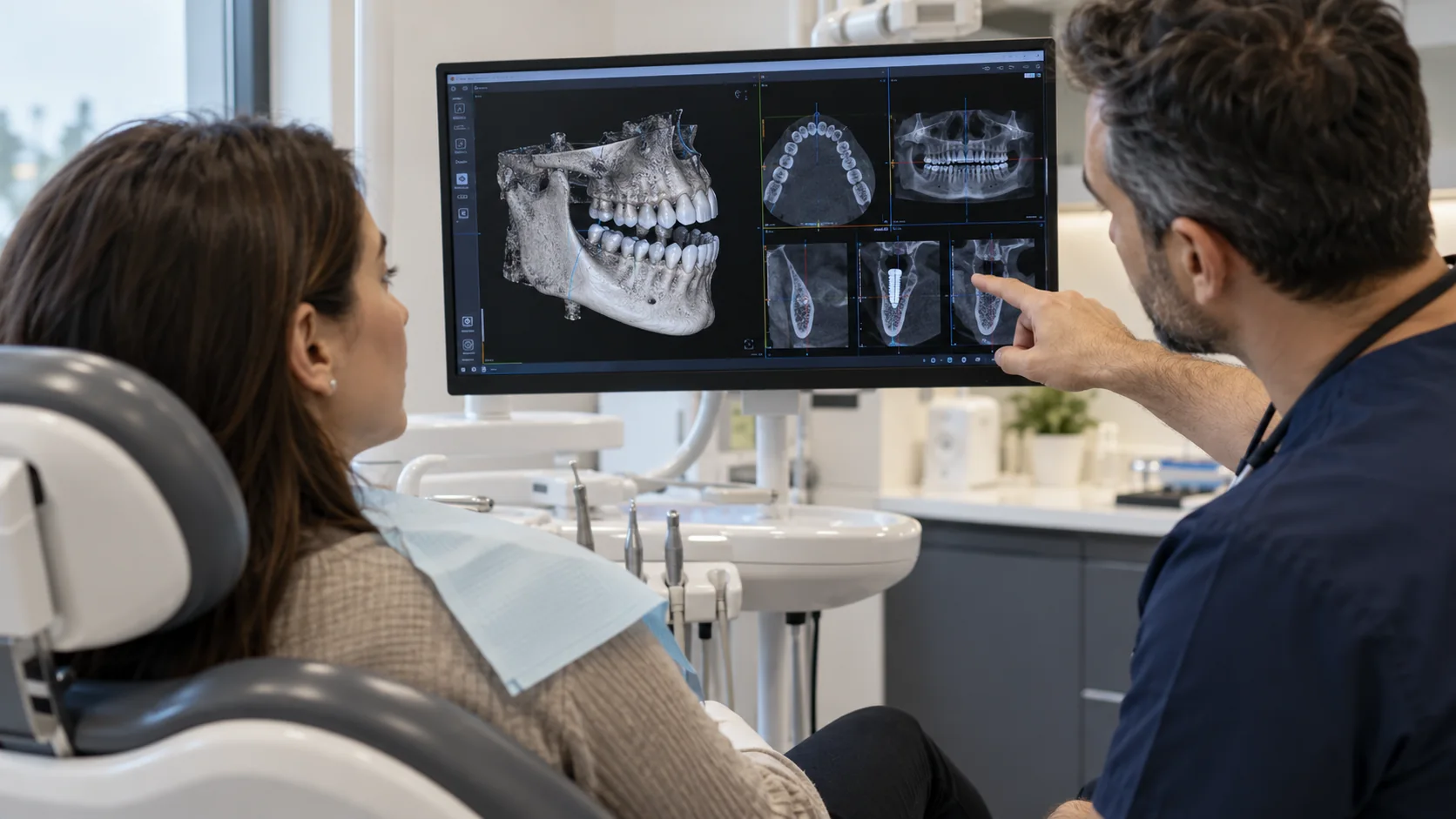
How does a dentist check bone for dental implants?
A 3D scan allows your implant dentist to evaluate the jaw in much more detail than simply looking at the visible gap.
- The width of the bone can be assessed.
- The available bone height can be reviewed.
- The position of the sinus can be considered in the upper jaw.
- The lower-jaw nerve can be identified during planning.
- Your dentist can decide whether grafting may be needed.
- Possible implant positions and angles can be planned.
For more on planning, see the dental implant procedure in Turkey.
Dental implant options when you have bone loss
Bone loss does not have one standard solution. Your treatment depends on where the missing teeth are and the anatomy shown on your scan.
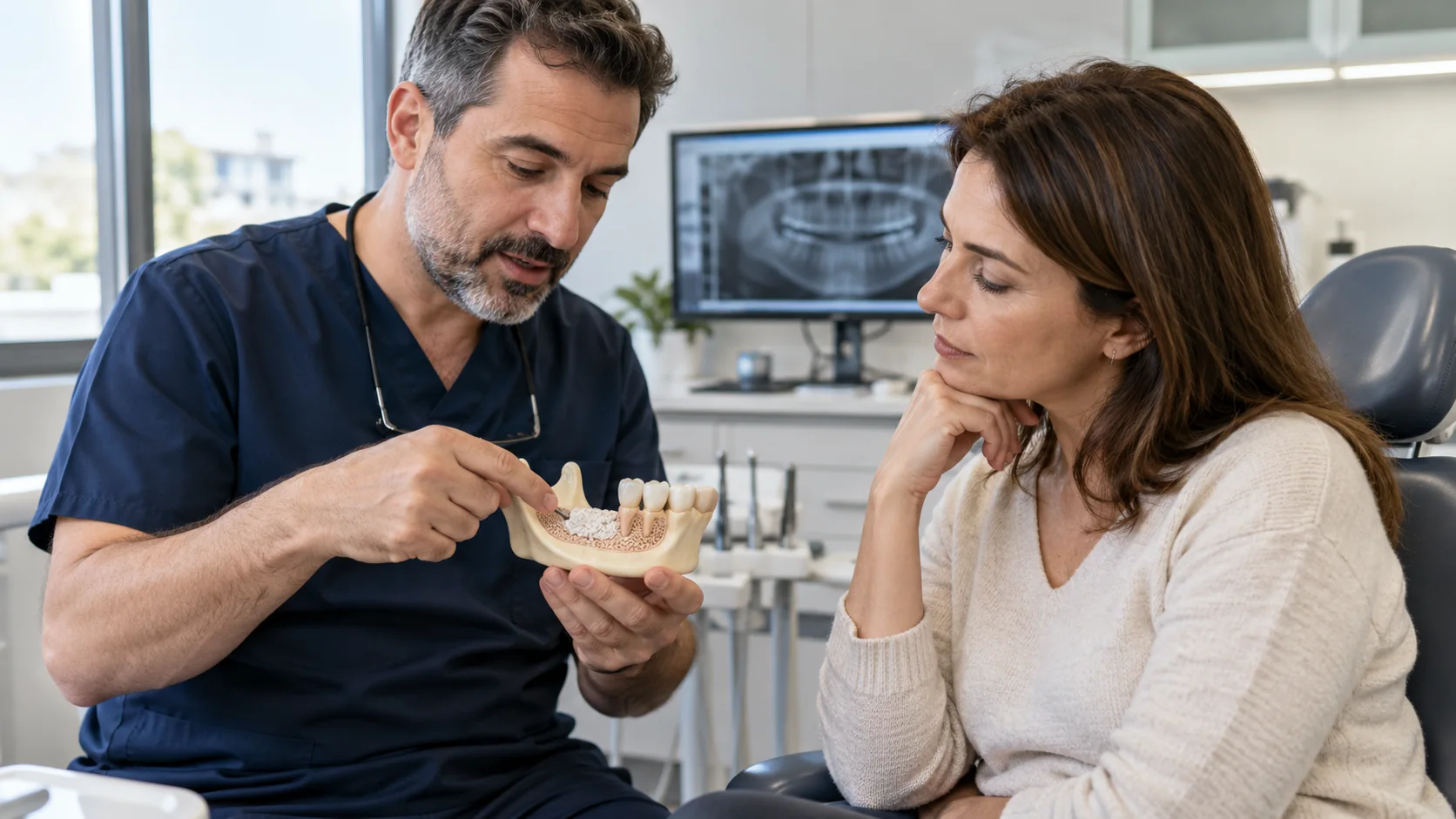
Bone graft
Bone graft material can be used to rebuild an area of the jaw that is too narrow or too low for the planned implant.
Sinus lift
In the upper back jaw, a sinus lift may add bone beneath the floor of the sinus where the available bone is too thin for the planned implant.
Implants using available bone
In selected cases, angled implants can make use of existing bone and may reduce or avoid the need for grafting.
When is a bone graft needed before dental implants?
A bone graft may be recommended when the planned implant position does not have enough suitable bone to provide the support your dentist wants.
The graft adds material to the area so the jaw can heal with more support available for implant treatment.
- The implant area is assessed with imaging.
- Your dentist decides whether more bone volume is required.
- Graft material is placed in the deficient area when appropriate.
- The graft may need time to heal before implant placement.
- In some cases, grafting and implant placement may be performed at the same treatment stage.
What if the bone is thin below the sinus?
The upper back jaw is a special area because the maxillary sinus sits above the roots of the upper back teeth.
When teeth have been missing for some time or the natural anatomy leaves only a limited amount of bone beneath the sinus, there may not be enough vertical bone for the planned implant.
In selected cases, the dentist may recommend a sinus lift. This procedure creates additional space for bone beneath the sinus floor so implant treatment can be planned in the area.
Can dental implants be placed without a bone graft?
Sometimes. Having bone loss does not necessarily mean your treatment must include bone grafting.
Some implant plans can make use of stronger or more favourable areas of existing bone rather than rebuilding every area that has lost volume.
Angled placement can sometimes use available bone while helping the dentist avoid nearby anatomical structures.
In selected full-arch cases, All-on-4 uses four implants with the back implants positioned at an angle.
A graft-free approach is not automatically suitable for everyone. Your 3D scan determines whether the available bone can safely support the planned treatment.
Read dental implants without a bone graft or compare All-on-4 vs All-on-6 dental implants.
Does bone loss make dental implant treatment take longer?
It can. The treatment timeline depends on whether an additional bone procedure is needed and whether it can be performed at the same time as implant placement.
Sometimes one surgical stage is possible
In selected situations, the dentist may be able to place a graft and an implant during the same treatment stage.
Whether this is appropriate depends on the defect and the stability that can be achieved at the implant site.
Some cases need extra healing time
When more substantial rebuilding is required, the graft may need to heal before the implant is placed.
This makes the overall treatment longer than straightforward implant placement, but it may provide the foundation needed for the planned implant.
For the wider timeline, see how long dental implant treatment takes.
Who can have dental implants despite bone loss?
Suitability is based on the whole clinical picture, not just the words “bone loss” on an old dental report.
- The amount and location of remaining bone need to be assessed.
- Your gums should be healthy enough for implant treatment.
- Active dental infection should be addressed.
- Your general health and medicines should be reviewed.
- Smoking habits should be discussed honestly.
- The proposed implant restoration needs to match the available anatomy.
You may also want to read who is a good candidate for dental implants?
Questions to ask your implant dentist
- How much bone do I have in the implant area?
- Do I actually need a bone graft?
- Can the implant and graft be placed together?
- Would I need a sinus lift?
- Is a graft-free implant option suitable for me?
- How does bone loss change my treatment time?
- Will I need more than one trip for treatment?
- What does my 3D scan show?
Dental implants with bone loss: frequently asked questions
Common questions about reduced jawbone, grafting and implant treatment.
Can you get dental implants if you have bone loss?
Often, yes. Depending on the location and amount of bone available, treatment may involve a bone graft, sinus lift or an implant approach that makes use of the existing bone. A 3D scan is needed to assess your individual situation.
Do you always need a bone graft if you have bone loss?
No. The need for grafting depends on where the bone loss is, how much support remains and the type of implant treatment planned. Some selected cases may use the available bone without a graft.
What is a bone graft for dental implants?
A bone graft adds material to an area of the jaw where more bone volume is needed for the planned implant. Depending on the case, the implant may be placed after the graft heals or sometimes during the same treatment stage.
What is a sinus lift?
A sinus lift adds bone beneath the floor of the sinus in the upper back jaw when the available bone is too thin for the planned implant.
Can All-on-4 be used with bone loss?
In selected full-arch cases, angled implants such as those used in All-on-4 can make use of existing bone and may help avoid grafting. Suitability depends on the anatomy shown on the patient’s 3D scan.
Can dental implants be placed without bone grafting?
Sometimes. Angled implants or alternative implant positions can be considered in suitable cases, but a graft-free approach is not right for every type of bone loss.
How do dentists know if I have enough bone for implants?
Your dentist assesses the implant area clinically and with appropriate imaging. A 3D scan can show bone height, width and the position of nearby structures such as the sinus and lower-jaw nerve.
Does a bone graft make implant treatment longer?
It can. Some grafts can be performed at the same time as implant placement, while other cases need a separate healing period before the implant can be placed.
Find out which dental implant option fits your jaw
If you have previously been told that you do not have enough bone for implants, send us your recent X-ray or dental scan. The implant team can review the missing-tooth area and explain whether your case may need a bone graft, sinus lift or another implant approach.
[…] If there is not enough bone for straightforward implant placement, read can you get dental implants with bone loss? […]