
What Can You Eat After Dental Implant Surgery?
Knowing what you can eat after dental implant surgery helps protect the healing area while still giving you practical meal options. The first day is usually the most restrictive, then you can gradually move from cool, soft foods toward a more normal diet as healing progresses.
The main idea is simple: avoid unnecessary pressure on the implant area, choose foods that are easy to chew, and follow the specific instructions given by your implant dentist.
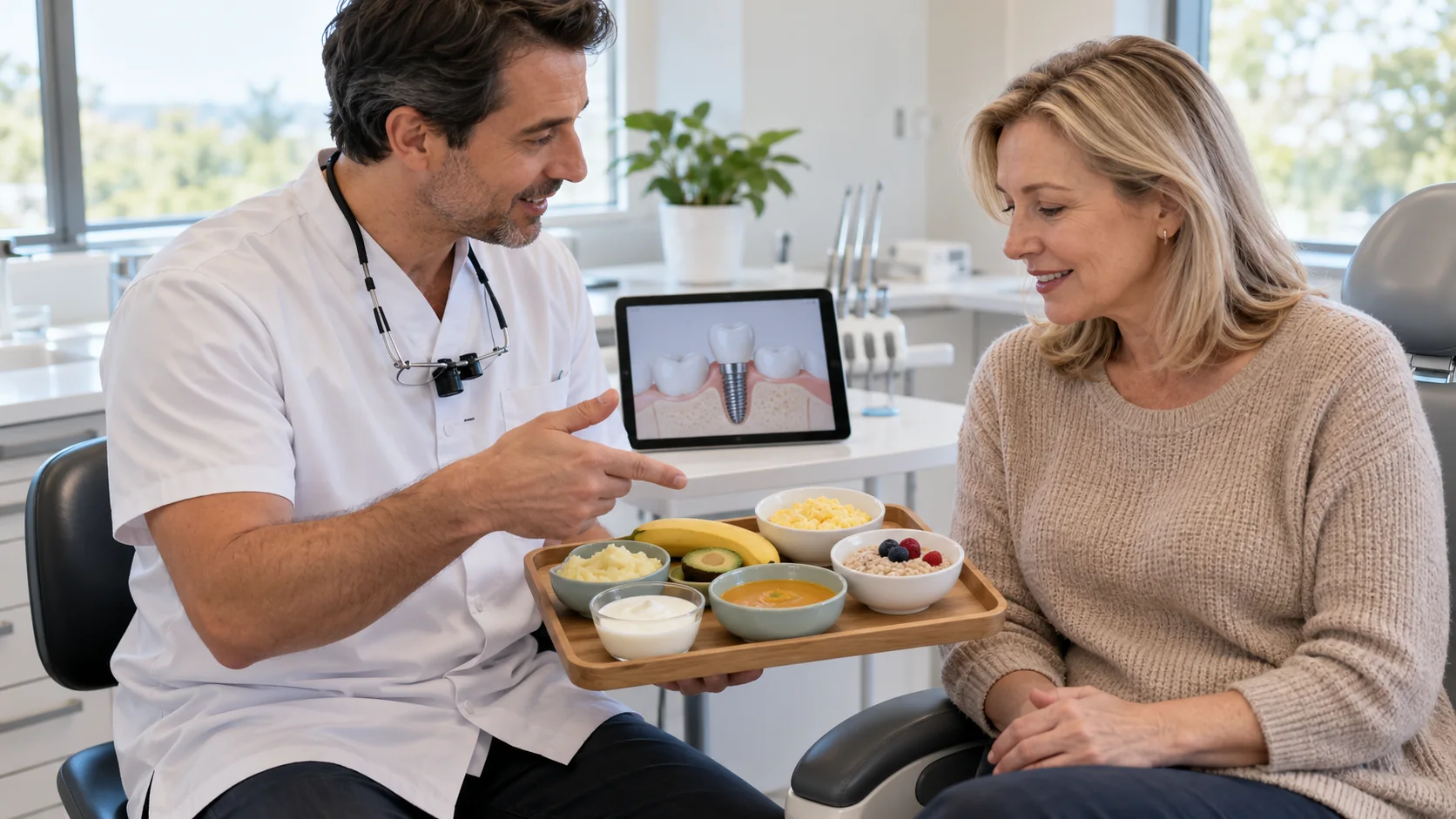
What should you eat after a dental implant?
For the first 24 hours after dental implant surgery, choose cool, soft foods such as yoghurt, smoothies and chilled soup, and drink water from a glass.
During the following days, foods such as scrambled eggs, soft pasta, fish, porridge and mashed vegetables are easier to manage. Food can usually be warm rather than hot.
Hard, crunchy or sticky foods should be avoided around the implant area during early healing. Your dentist can tell you when it is appropriate to return fully to your normal diet.
For the wider recovery process, read our dental implant recovery guide.
What to eat after dental implant surgery, stage by stage
Your diet normally becomes less restrictive as the surgical area settles. These stages provide a practical guide, but your own dentist’s instructions come first.
First 24 hours
- Yoghurt
- Smoothies
- Chilled soup
- Other cool, soft foods
- Water sipped from a glass
- Hot food and drinks
- Drinking through a straw
- Alcohol
- Smoking
- Forceful rinsing or spitting
Keep meals simple and gentle while the surgical area is fresh.
Days 2 to 7
- Scrambled eggs
- Soft pasta
- Fish
- Porridge
- Mashed vegetables
- Warm rather than hot meals
- Crunchy foods
- Hard foods
- Sticky foods
- Chewing directly on the implant side
Continue to be gentle around the implant area while increasing the variety of your meals.
Until your final teeth
- Most soft everyday foods
- Foods cut into smaller pieces
- Meals that need only gentle chewing
- Chewing mainly on the other side when advised
- Nuts on the implant side
- Crusty bread
- Ice
- Very hard foods near the healing implant
The implant may still be healing in the bone even when your mouth feels much more comfortable.
With your final teeth
- Your normal balanced diet
- The everyday foods you have missed
- Foods that can be comfortably chewed
- Chewing ice
- Very hard sweets
- Opening packets with your teeth
- Smoking for long-term implant health
Final teeth still need sensible use, daily cleaning and regular dental reviews.
Best foods for the first 24 hours after dental implant surgery
The first day is about keeping eating easy while avoiding unnecessary irritation to the surgical area.
- Choose foods that need very little chewing.
- Cool foods can be easier to manage immediately after treatment.
- Drink plenty of water from a glass.
- Keep food away from the implant area as much as practical.
- Follow any additional instructions given after your specific surgery.
Soft foods to eat after dental implant surgery
Once you move beyond the first day, there are plenty of soft meals that do not require an all-liquid diet.
Scrambled eggs
Soft, easy to portion and require relatively little chewing.
Soft pasta
Cook pasta until soft and avoid hard or crunchy toppings during early healing.
Fish
Soft fish can be easier to chew than firmer meats during the first week.
Porridge
A soft breakfast option once food can be comfortably eaten warm rather than hot.
Mashed vegetables
Soft mashed vegetables provide an easy way to add variety without heavy chewing.
Yoghurt and smoothies
Useful options when you want something cool and soft, especially at the beginning.
What should you not eat after dental implant surgery?
Foods that are hard, crunchy or sticky can place unnecessary pressure around a recently treated area.
The exact restrictions depend on your implant treatment, whether temporary teeth were fitted and where the implant was placed.
They can require strong chewing and are better avoided on the healing implant side.
A hard crust can place more pressure on the area than soft bread or softer meals.
Do not chew ice around a healing implant or with your final restorations.
Sticky foods can be difficult to manage around a tender surgical area.
During the earliest stage, choose cool foods first and then move toward warm meals.
Even with final teeth, biting very hard sweets is best avoided.
If you smoke, also read smoking and dental implants.
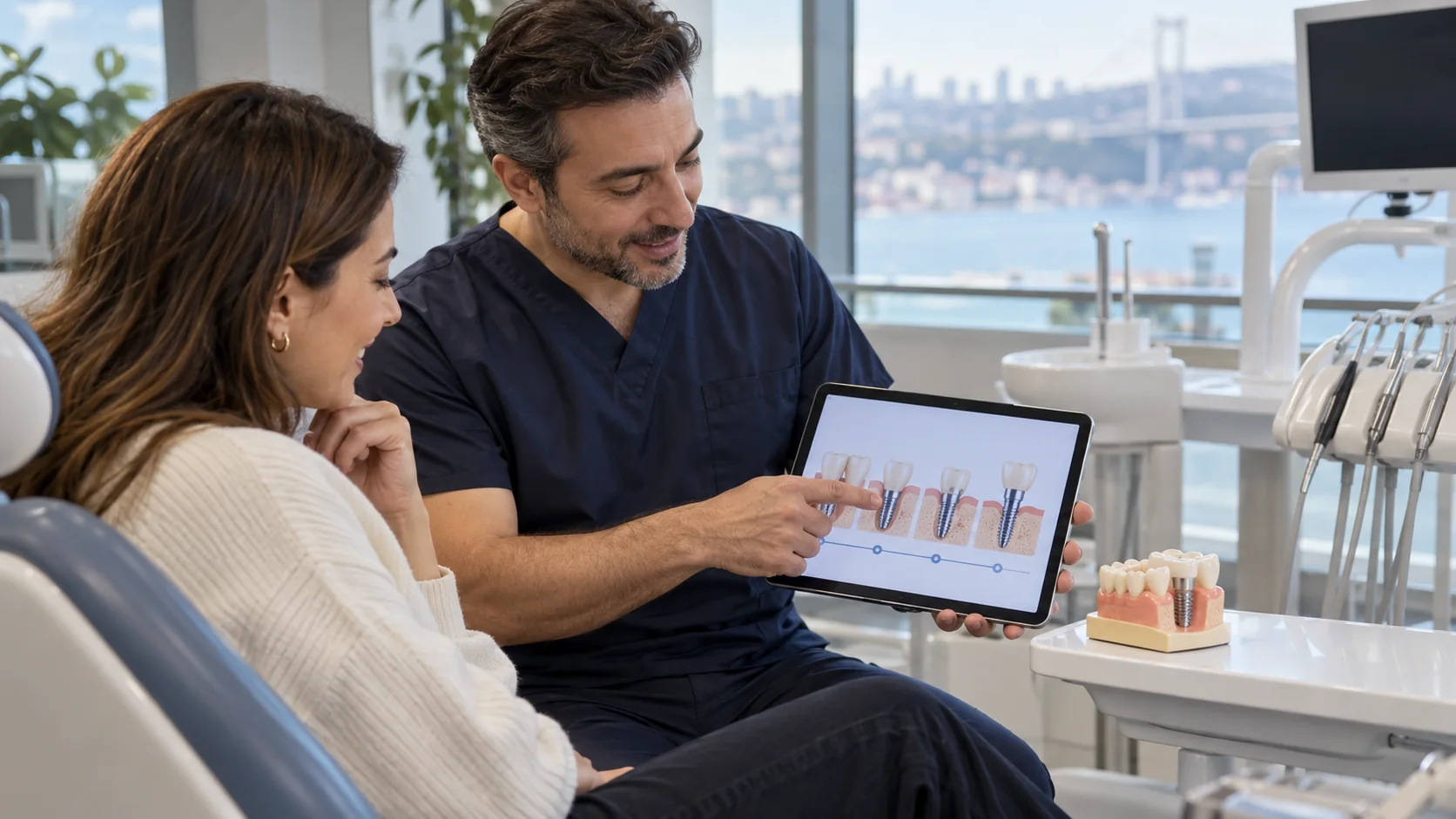
Can you chew normally after a dental implant?
Not immediately. Early after surgery, the goal is to reduce pressure around the implant site.
During the first week, soft foods are easier to manage and the implant side should generally be treated carefully. As healing progresses, you can gradually return to more everyday foods according to your dentist’s instructions.
If you have a temporary tooth or temporary fixed teeth, remember that feeling comfortable does not necessarily mean the underlying implant has finished healing.
Learn more about what happens between implant placement and the final crown.
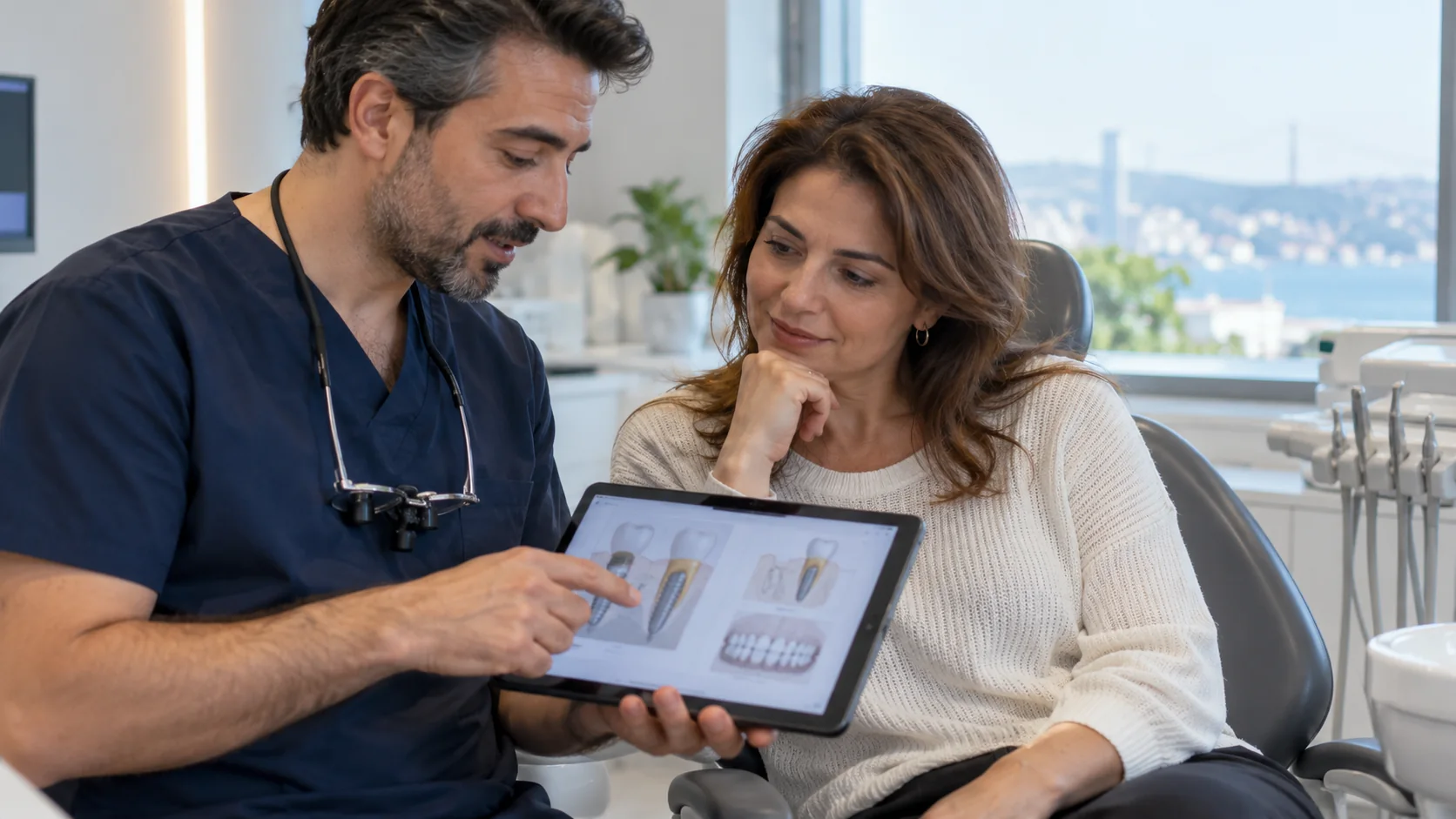
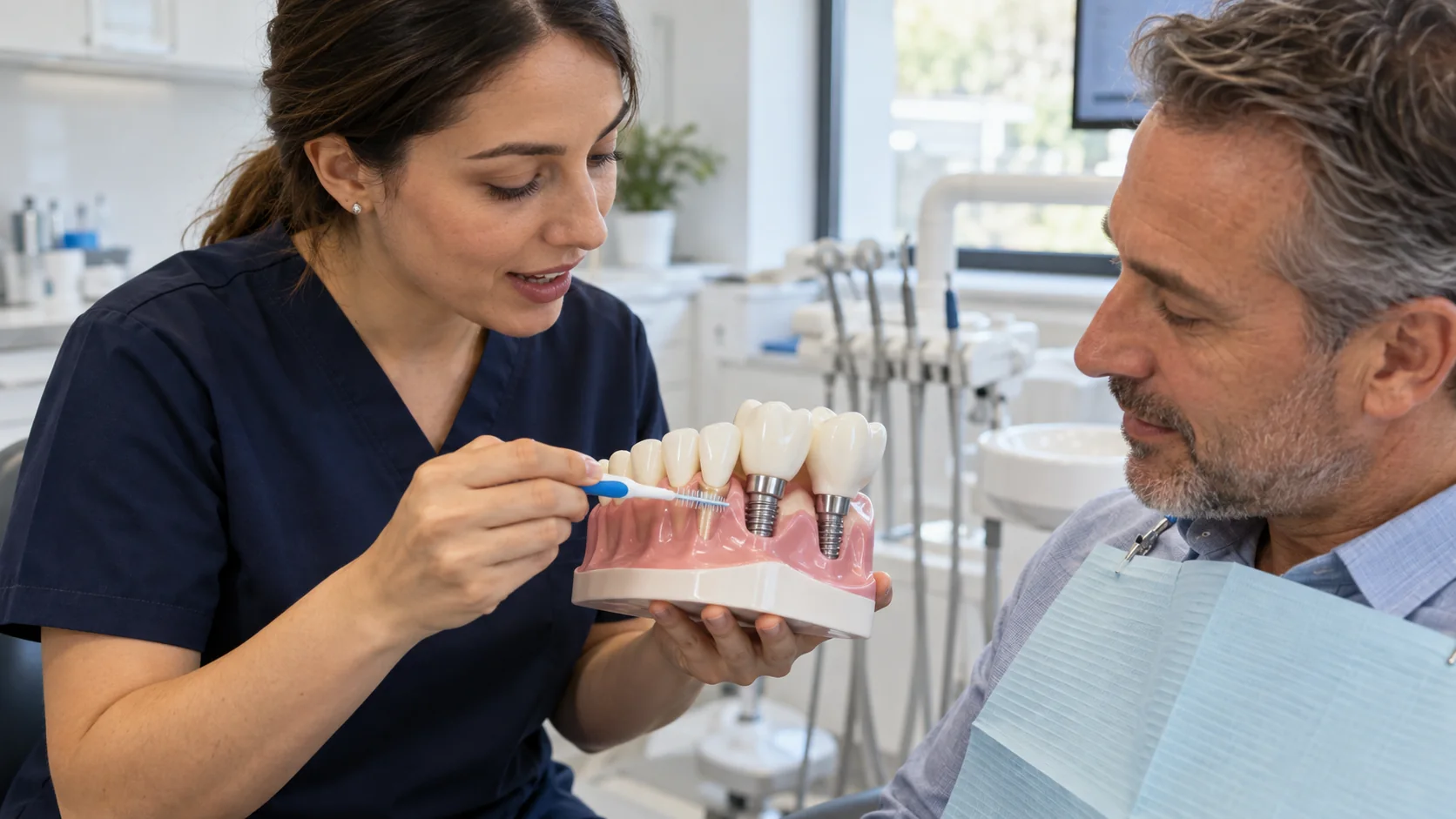
When can you return to a normal diet after dental implants?
The transition back to your normal diet depends on how your implants are healing and what type of restoration you have.
Once your dentist confirms that treatment has progressed appropriately and your final teeth are fitted, you can generally enjoy a much broader range of everyday foods.
- Continue sensible chewing habits Avoid using your implant crowns to crack or bite extremely hard objects.
- Do not chew ice Ice can place unnecessary force on natural teeth and restorations.
- Never use teeth as tools Do not open packets or packaging with your teeth.
- Keep the area clean Long-term implant care remains important after your diet returns to normal.
Food is only one part of dental implant recovery
Your diet protects the area from unnecessary chewing pressure, but cleaning and monitoring your recovery are just as important.
- Swelling and soreness should begin to settle after the first few days.
- The gum should gradually close and heal around the treated area.
- There should not be ongoing worsening pain, persistent bad taste or obvious looseness.
Eating after dental implant surgery: FAQs
Quick answers about meals, chewing and returning to normal foods after implant placement.
What can I eat immediately after dental implant surgery?
Cool, soft foods such as yoghurt, smoothies and chilled soup are practical choices during the first 24 hours. Drink water from a glass and follow your dentist’s individual aftercare instructions.
What can I eat on days 2 to 7 after dental implants?
Soft foods such as scrambled eggs, pasta, fish, porridge and mashed vegetables are useful choices. Food can usually be warm rather than hot, while hard, crunchy and sticky foods should still be avoided around the implant area.
Can I eat pasta after dental implant surgery?
Soft pasta is one of the easier foods to eat during the first week. Cook it until soft and avoid hard or crunchy additions near the healing implant.
Can I eat eggs after dental implant surgery?
Scrambled eggs are a useful soft-food option during early dental implant recovery because they require relatively little chewing.
When can I eat normally after a dental implant?
Your diet can normally become more varied as healing progresses, but the exact timing depends on your procedure and your dentist’s assessment. Avoid very hard foods on the implant side until your dentist says they are appropriate.
Can I chew on the implant side?
During early healing, it is generally better to avoid putting unnecessary chewing pressure directly on the implant side. Follow your dentist’s instructions about when to resume normal chewing.
Can I drink through a straw after dental implant surgery?
The site’s initial aftercare guidance advises avoiding drinking through a straw during the first 24 hours. Sip water from a glass instead.
What foods should I avoid while my implant heals?
Hard, crunchy and sticky foods should be avoided around the healing implant. Examples include nuts, crusty bread and ice on the implant side until your dentist advises otherwise.
Have a question about eating after your dental implant?
If you have had dental implant treatment in Turkey and are unsure whether a particular food is suitable during your recovery, contact the dental team and tell us how many days it has been since your surgery.