
Immediate vs Traditional Dental Implants
Immediate vs traditional dental implants mainly describes when the implant is placed in relation to tooth removal. With immediate implant placement, the implant may be inserted during the same appointment as the extraction. A traditional or delayed approach allows the extraction site to heal before implant placement.
Immediate treatment can reduce the number of surgical stages in suitable cases, but it is not automatically the better option. The socket, bone, gum condition, infection status and ability to achieve implant stability all influence the decision.
It is also important not to confuse immediate implant placement with same-day temporary teeth. They are related concepts, but they are not the same thing.

What is the difference between immediate and traditional implants?
An immediate dental implant is placed at or very soon after the tooth is removed, using the extraction site as part of the implant treatment.
With a traditional dental implant, the dentist may allow the extraction site and surrounding tissues to heal first before placing the implant during a later appointment.
Immediate placement can shorten the sequence of treatment, but only when the implant can be positioned predictably and the surrounding bone and soft tissues are suitable.
See the complete dental implant procedure in Turkey.
Immediate placement, same-day teeth and traditional implants are not the same thing
Dental implant terminology can sound similar even when it describes different treatment stages.
Immediate implant placement
The implant is placed into the extraction area during the same appointment in which the tooth is removed, when the site is suitable.
Immediate or same-day loading
A temporary tooth or fixed temporary restoration is attached soon after implant placement when the implant has sufficient initial stability.
Traditional or delayed placement
The extraction site is allowed to heal before the implant is placed during a later treatment stage.
Immediate dental implants vs traditional implants
Both approaches aim to create a stable implant that can support the final restoration after healing. The difference is mainly how treatment is timed.

Immediate dental implant
The tooth is removed and an implant may be placed during the same surgical appointment if the remaining bone and tissues allow predictable positioning and stability.
- Can reduce the number of surgical stages
- Avoids waiting for complete socket healing before implant placement
- Requires suitable bone and anatomy
- May still need a graft around the implant
- Does not automatically mean the final crown is fitted immediately

Traditional dental implant
The tooth is removed and the site is given time to heal before implant placement. This separates extraction and implant surgery into different stages.
- Allows the extraction area to settle before implant placement
- Can be useful when the site is not ideal for immediate placement
- Provides another opportunity to reassess healed bone and gum
- May still require bone grafting depending on the site
- Usually makes the overall timeline longer
Immediate vs traditional dental implants: key differences
| Feature | Immediate Implant | Traditional Implant |
|---|---|---|
| When implant is placed | At or immediately after tooth extraction | After a period of healing following extraction |
| Number of surgical stages | May reduce the number of separate surgical appointments | Extraction and implant placement are usually separate stages |
| Bone requirements | Enough suitable bone is needed for correct position and initial stability | The healed site is reassessed before implant placement |
| Grafting | May still be needed around the implant | May be performed before or during later implant placement |
| Temporary tooth | May sometimes be possible quickly if stability allows | A separate temporary solution may be used while the site heals |
| Final crown | Usually fitted after implant healing | Usually fitted after implant healing |
| Total treatment time | Can shorten the sequence in suitable cases | Often longer because extraction healing is a separate stage |
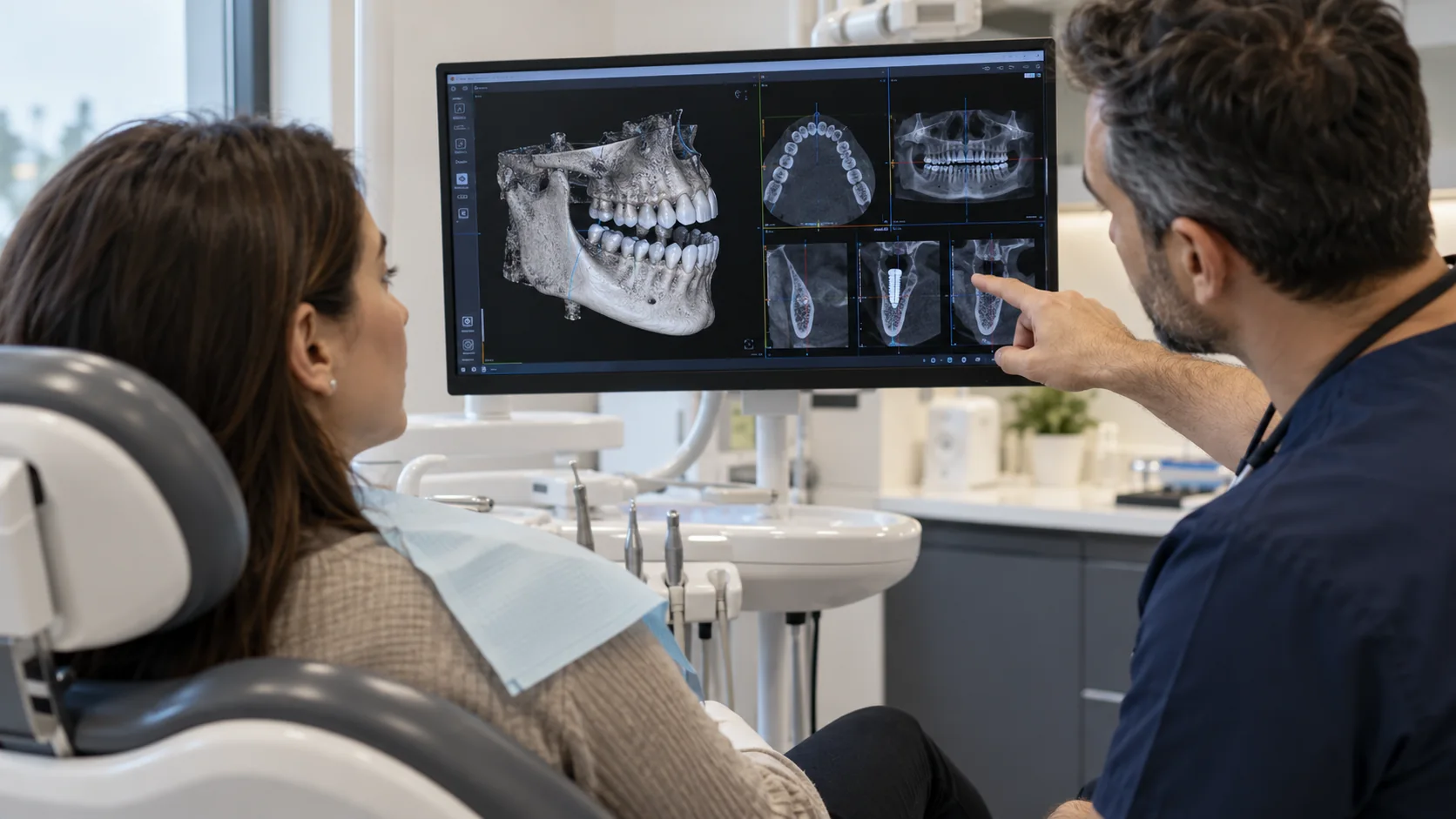
When can an implant be placed immediately after extraction?
Immediate placement depends on whether the dentist can create a stable and well-positioned implant in the remaining bone after the tooth is removed.
- The implant site needs enough usable bone for stability.
- The implant must be positioned correctly for the future crown or bridge.
- The surrounding gum and bone condition must be assessed.
- Active infection or extensive tissue damage may change the plan.
- The dentist may need to add graft material around the implant.
- A 3D scan can help assess the site before surgery.
Why might a dentist recommend traditional implant placement?
Waiting is not necessarily a disadvantage. Sometimes allowing the site to heal first provides a more predictable environment for later implant placement.
- The extraction site needs healing The tissues may benefit from a separate healing stage before implant surgery.
- There is not enough stable bone immediately The implant needs adequate support and correct positioning rather than simply being placed as quickly as possible.
- Bone reconstruction is required A graft may need to heal before implant placement in more substantial bone defects.
- The infection or damaged tissue needs treatment Your dentist may want the site to settle before placing an implant.
- The final implant position would be better after healing Restorative position and long-term function matter more than speed alone.

Does an immediate implant mean you get a tooth on the same day?
Not necessarily. This is one of the most common misunderstandings around immediate dental implants.
An implant can be placed immediately after extraction but then left to heal without carrying a fixed tooth immediately.
A temporary tooth can sometimes be attached quickly when the implant has enough initial stability and the bite can be managed appropriately.
See what happens between implant placement and the final crown.
Both immediate and traditional implants need time to heal
Immediate placement can change when the implant enters the jaw, but it does not remove the biological healing process.
- The implant is placed into a planned position.
- The surrounding bone and gum begin healing.
- The implant needs to become stable within the jawbone.
- Chewing pressure is controlled according to the treatment plan.
- The dentist reviews healing before the definitive restoration.
- The final crown, bridge or full-arch teeth are fitted when appropriate.
See how long dental implant treatment takes and dental implant recovery.
Can immediate implants be placed if you have bone loss?
Possibly, but bone loss can make immediate placement more complex because the implant still needs enough suitable bone to achieve the planned position and stability.
Small gaps around an immediate implant may sometimes be managed with graft material, while more extensive bone loss may favour a staged treatment plan.
Read can you get dental implants with bone loss? and when bone grafting is needed.
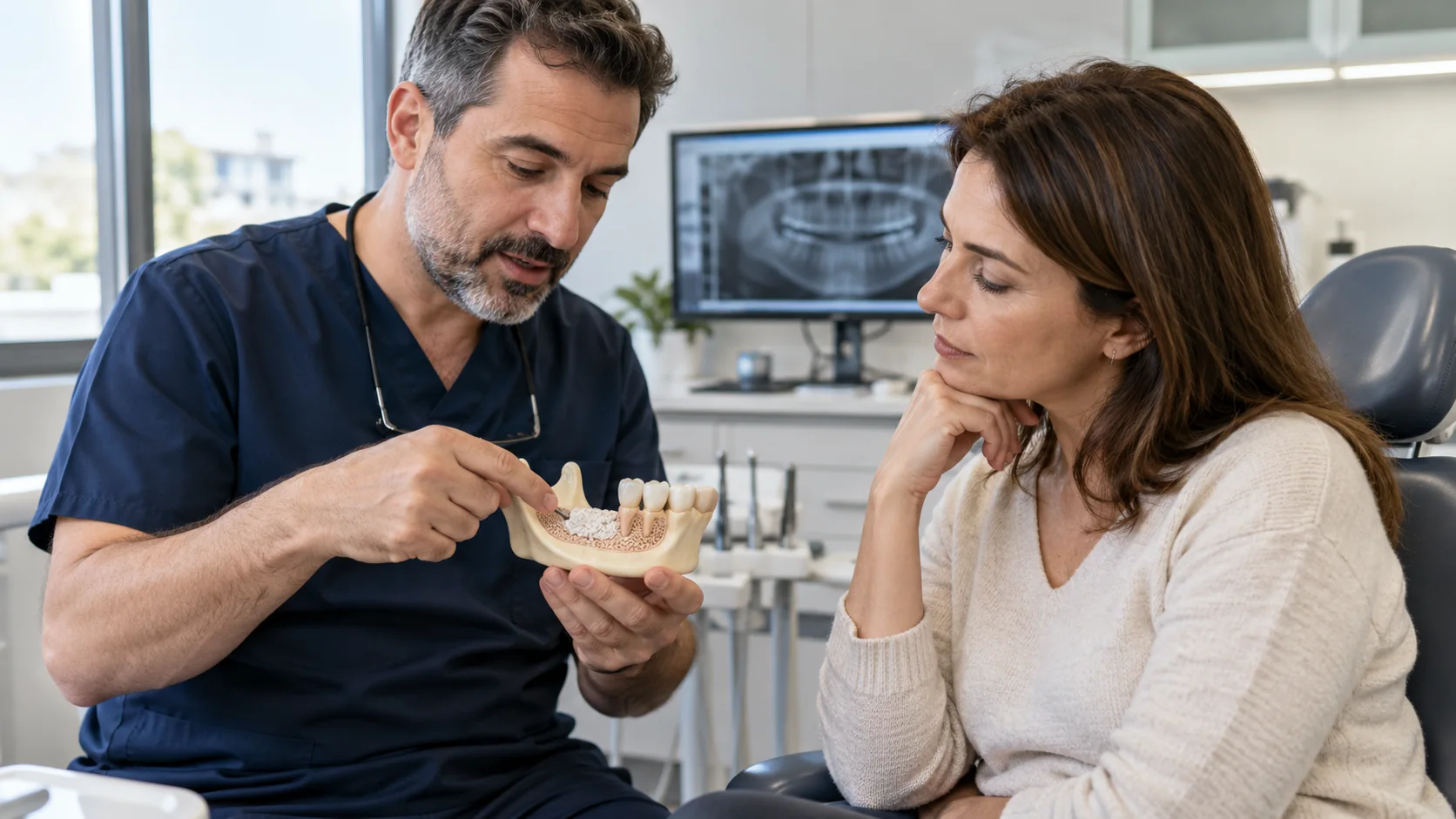
Which is faster: immediate or traditional dental implants?
Immediate placement can shorten the overall sequence because extraction and implant placement happen during the same surgical stage. Traditional placement includes an additional period between extraction and implant surgery.
Potentially fewer treatment stages
When suitable, the tooth can be removed and the implant placed at the same appointment.
You still need healing time before the final crown or bridge unless your specific plan says otherwise.
More stages, but sometimes more appropriate
The extraction site heals first. The implant is then placed later and needs its own healing period before the final restoration.
The extra time can be worthwhile when the site needs healing or reconstruction before implant placement.
Questions to ask about immediate vs traditional implants
The right question is not simply “Which is faster?” but “Which approach is most suitable for this extraction site?”
- Can my implant be placed at the same appointment as the extraction?
- How much bone will remain after the tooth is removed?
- Can you achieve enough initial implant stability?
- Is there infection or tissue damage around the tooth?
- Will I need bone graft material?
- Can I have a temporary tooth on the same day?
- Will the temporary tooth be allowed to contact my bite?
- How long will the implant need to heal?
- When will my final crown or bridge be fitted?
- Why are you recommending immediate or traditional placement for my case?
Immediate vs traditional dental implants: FAQs
Common questions about extraction timing, same-day teeth and implant healing.
What is an immediate dental implant?
An immediate dental implant is placed into the planned area at the same appointment as tooth extraction, when the remaining bone and surrounding tissues allow suitable implant positioning and stability.
What is a traditional dental implant?
With traditional or delayed implant placement, the extraction site is given time to heal before the implant is placed during a later treatment stage.
Is an immediate implant better than a traditional implant?
Not automatically. Immediate placement can reduce treatment stages in suitable cases, while traditional placement may be more appropriate when the extraction site needs healing, grafting or further assessment first.
Does an immediate implant mean I get a tooth the same day?
No. Immediate implant placement describes when the implant is inserted. A temporary tooth may sometimes be attached quickly if stability allows, while the final crown usually follows after healing.
Can I have an immediate implant if there is bone loss?
Sometimes. The dentist needs enough suitable bone to position and stabilise the implant. More significant bone loss may require grafting or a staged treatment approach.
Do immediate implants still need to heal?
Yes. Immediate placement does not eliminate implant healing. The implant still needs time to become stable within the jawbone before the definitive restoration is placed according to the treatment plan.
Which option is faster?
Immediate placement can shorten the sequence because extraction and implant placement occur during the same stage. Traditional treatment usually includes additional healing time before implant placement.
How does the dentist decide between immediate and traditional implants?
The decision depends on the extraction site, available bone, gum condition, infection, implant position, initial stability and the type of final restoration being planned.
Find out whether immediate implant placement suits your case
If you have a tooth that needs extraction and want to know whether an implant can be placed during the same appointment, send us your recent X-ray or scan. The dental team can review the site and explain whether immediate or traditional implant placement may be more appropriate.
[…] Compare the approaches in Immediate vs Traditional Dental Implants. […]
[…] See Immediate vs Traditional Dental Implants. […]