Dental Implants Without Bone Graft
Dental implants without a bone graft may be possible when enough usable jawbone remains in suitable positions for implant placement.
In some full-arch cases, angled implants can make use of available bone and avoid important structures such as the nerve or sinus. However, avoiding grafting is not appropriate for every patient, and the decision should be based on a dental examination and 3D scan.
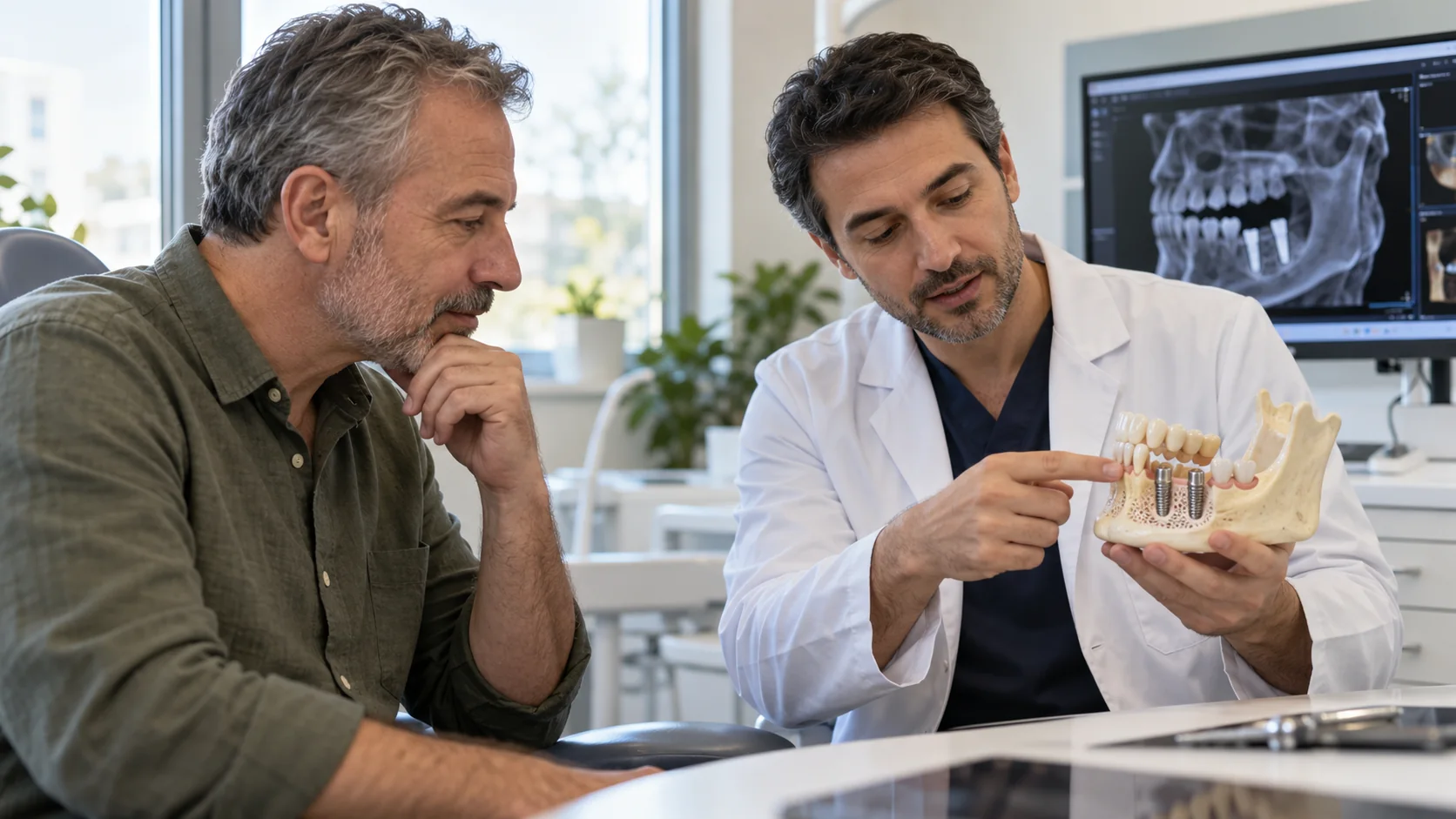
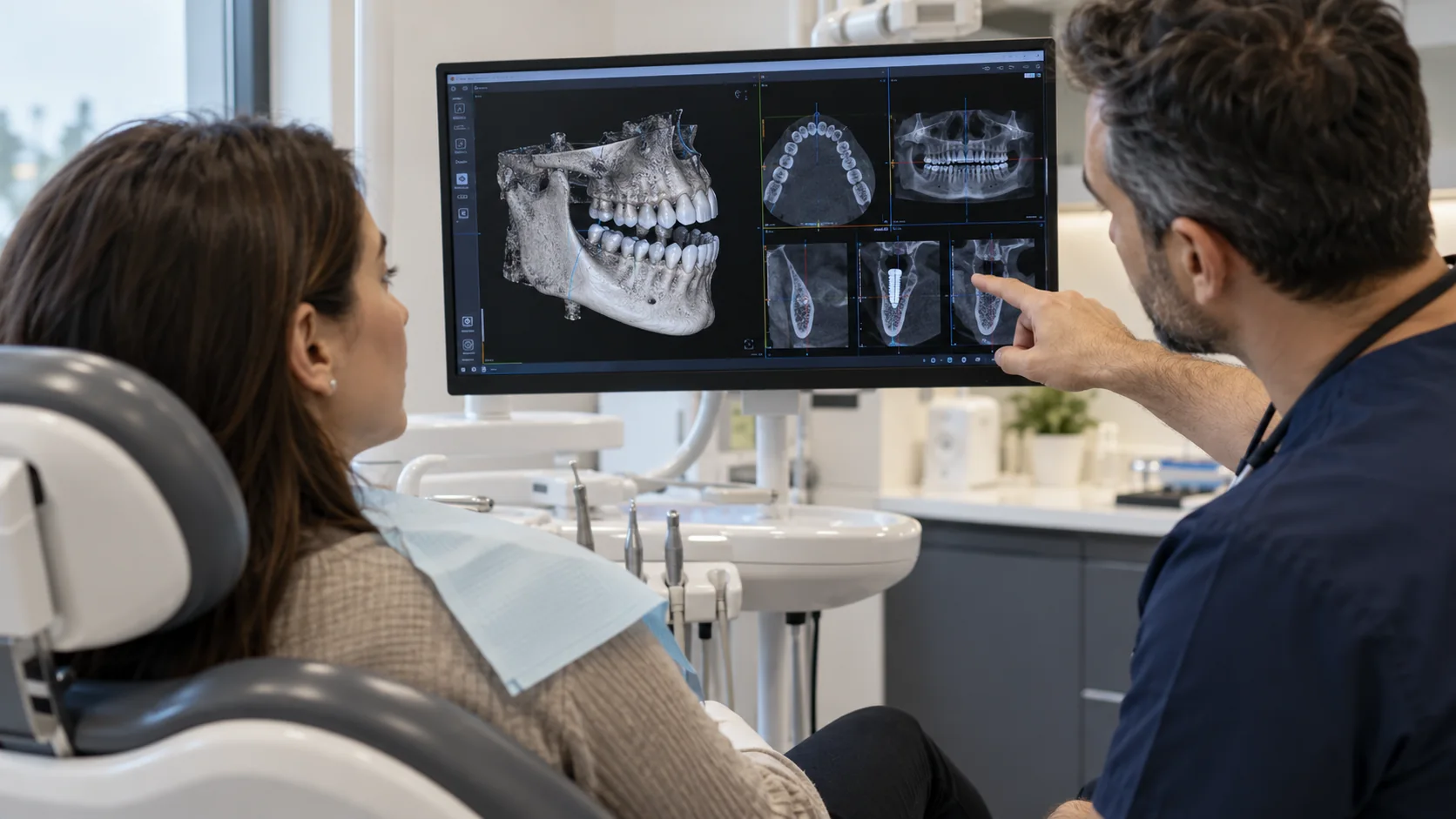
The 3D scan shows whether implants can use existing bone or whether rebuilding bone is the safer treatment.
Can Dental Implants Be Placed Without a Bone Graft?
Yes, in some patients. Having some bone loss does not automatically mean that bone grafting is required.
What matters is whether enough suitable bone remains in the positions needed for the planned implants.
The dentist uses dental imaging and a 3D scan to evaluate bone width, bone height, nearby nerves, the sinus and the final restorative plan.
Who May Be Suitable for Dental Implants Without Bone Grafting?
Suitability depends on where your usable bone remains and what type of restoration is being planned.
Enough Bone Remains
The intended implant site may still have enough bone height and width to place an implant without rebuilding the jaw first.
Useful Bone in Another Position
In selected cases, implant positions can be planned to make better use of the stronger bone that is already available.
Full-Arch Treatment
A full-arch approach may allow several implants to be distributed across available bone rather than replacing every missing tooth with its own implant.
Angled Implant Planning
Angled posterior implants may sometimes help avoid areas where available bone is limited.
Suitable Jaw Anatomy
The dentist needs to plan around structures such as the nerve in the lower jaw and the sinus in the upper jaw.
Stable Implant Placement
The proposed position must still allow the implant to achieve appropriate support and fit the planned final restoration.
How Angled Implants Can Sometimes Avoid Bone Grafting
In selected full-arch cases, angled implants can help the dentist use the bone that is already available.
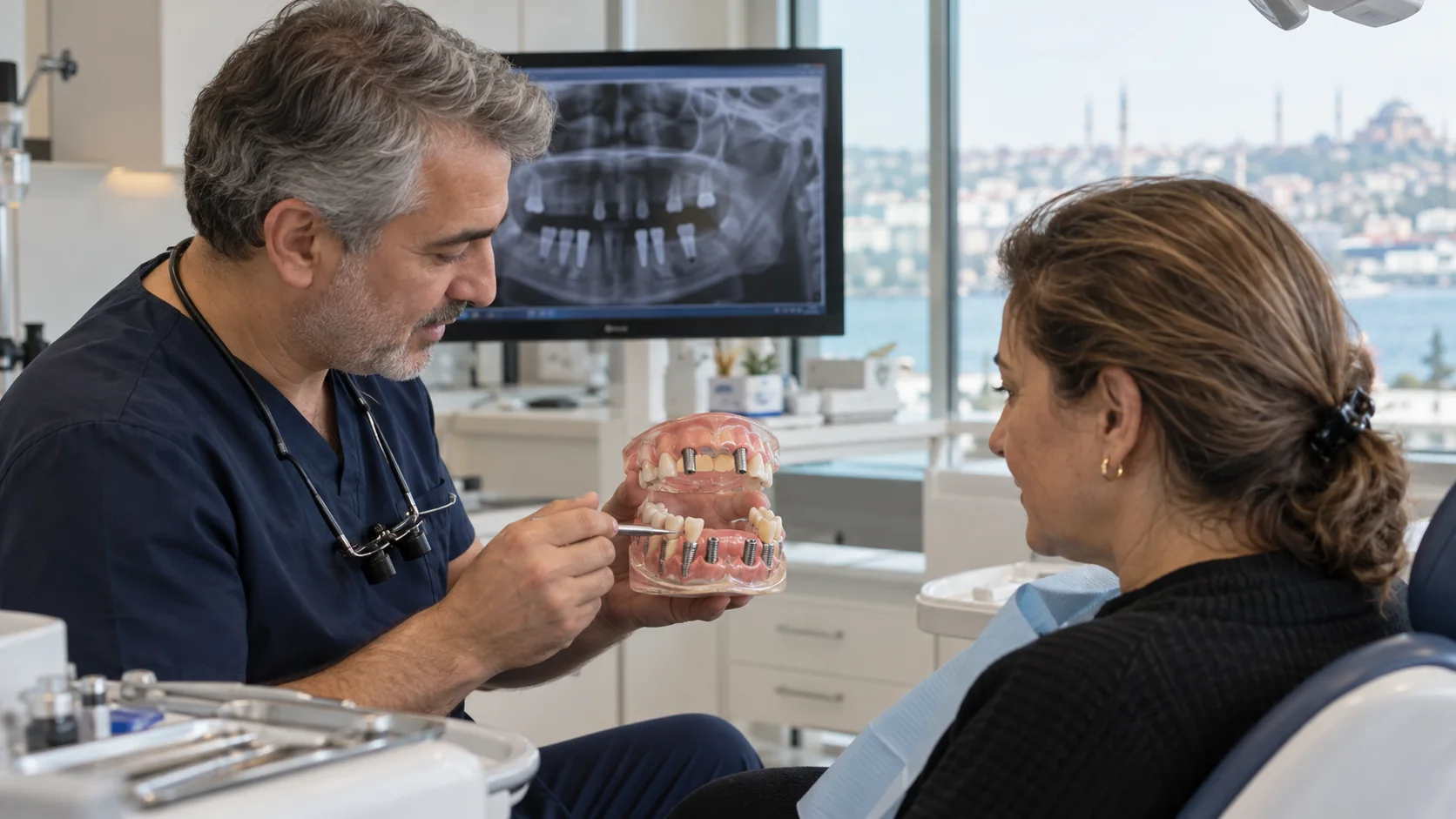
Rather than placing every implant vertically in an area where bone may be limited, the implant angle can sometimes be planned to use a more favourable section of bone while remaining clear of anatomical structures.
This concept is commonly associated with All-on-4, where the posterior implants are placed at an angle.
The position is planned from the 3D scan and the final full-arch restoration. The goal is to use suitable existing bone—not simply to avoid grafting at any cost.
How Your Dentist Checks Whether a Bone Graft Can Be Avoided
A normal visual examination cannot show everything needed to decide whether graft-free implant treatment is appropriate.
3D imaging helps the dentist assess the available bone and nearby anatomical structures before deciding where an implant can be placed.
The scan shows whether sufficient vertical bone exists at the proposed implant site.
The dentist assesses whether the jaw is wide enough for the planned implant position.
Lower-jaw planning needs to account for the location of the nerve.
Upper back implants need to be planned in relation to the sinus and available bone beneath it.
The implant still needs to support a crown or full arch in an appropriate restorative position.
All-on-4 Dental Implants Without Bone Graft
All-on-4 is one of the main approaches considered when a patient needs a fixed full arch and the dentist wants to make use of the existing jawbone.
The system uses four implants in the jaw. The back implants are angled, which may help use available bone and avoid areas such as the sinus or nerve in suitable cases.
This does not mean every patient with severe bone loss can automatically avoid grafting with All-on-4. The 3D scan still determines whether enough suitable bone remains.
A complete fixed arch is supported by four planned implant positions.
The rear implants can be angled to make use of available bone.
The implants support a complete arch rather than one implant being required for every missing tooth.
Bone quantity and anatomy still determine whether the approach is suitable.
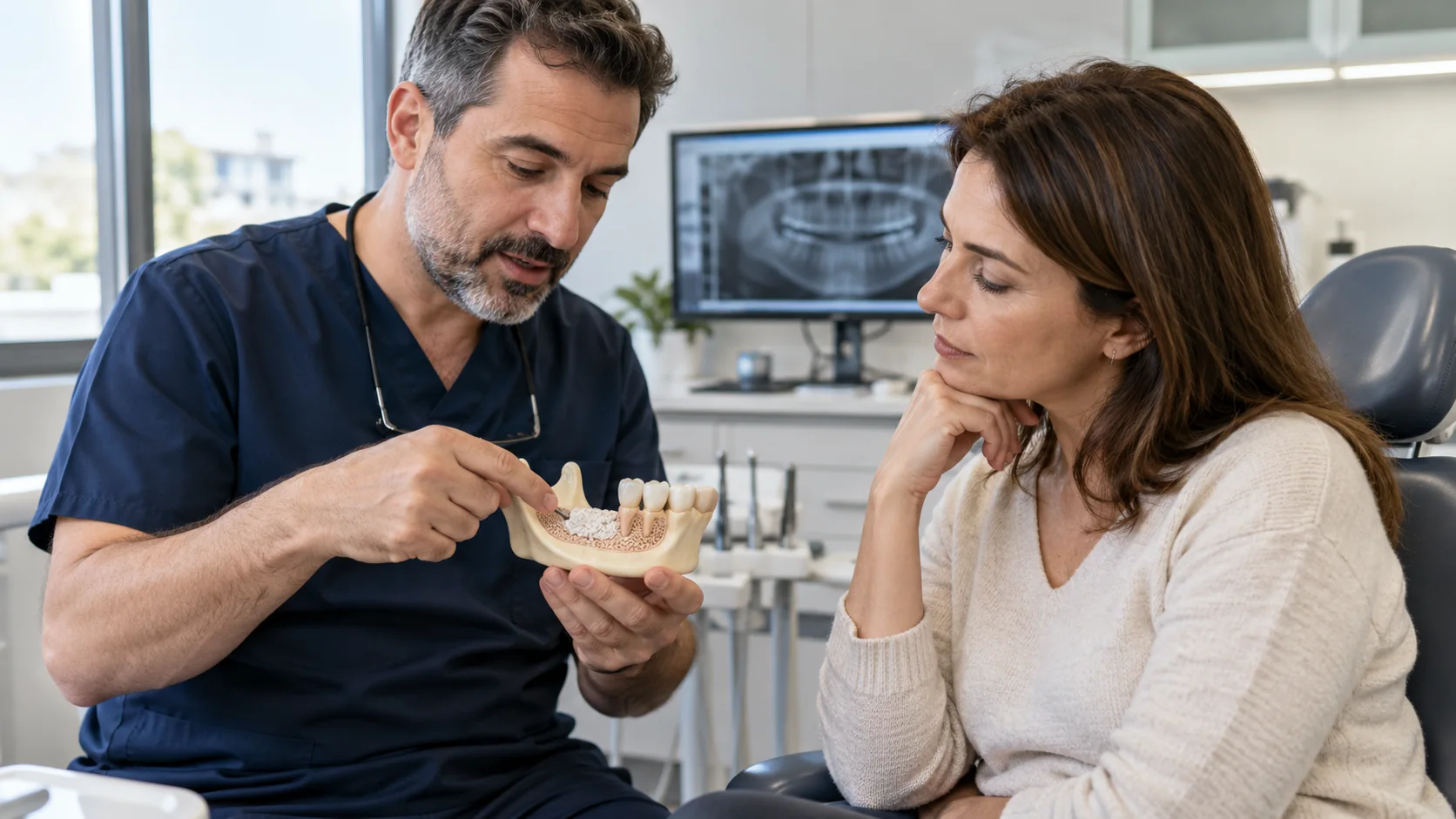
When Should You Not Try to Avoid a Bone Graft?
Avoiding a graft should not come before safe implant positioning.
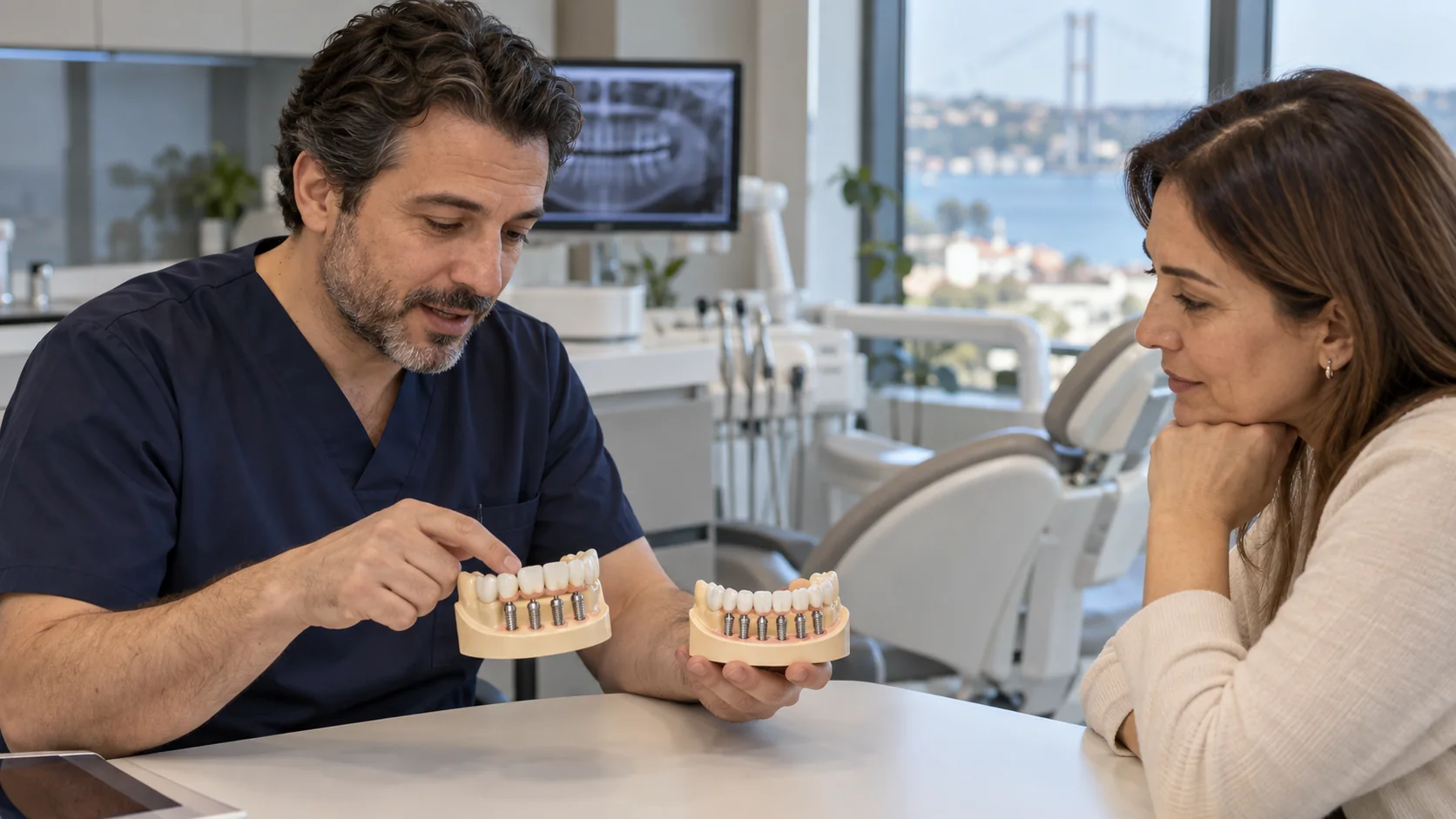
If the planned implant area does not provide enough usable bone, rebuilding the site may be more appropriate than forcing an implant into an unsuitable position.
Bone graft material can rebuild an area where the jaw is too thin or too low. Depending on the individual case, the implant may be placed after the graft heals or sometimes during the same treatment stage.
If grafting provides the bone needed for the planned implant and restoration, avoiding it purely to shorten treatment may not be the appropriate choice.
Read: Bone Graft for Dental Implants Turkey and When Is Bone Grafting Needed Before Dental Implants?
Can a Sinus Lift Be Avoided?
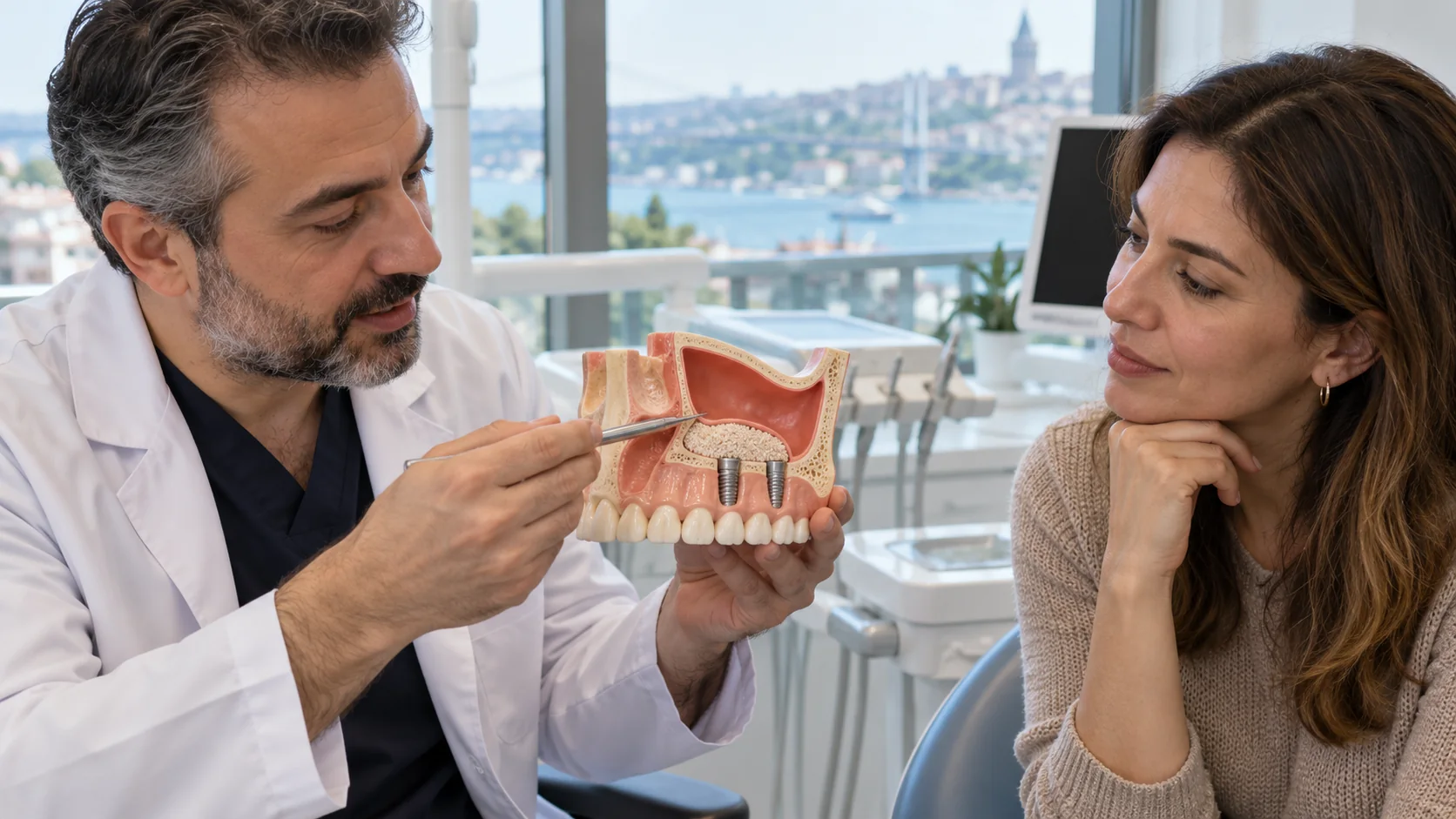
The upper back jaw needs special assessment because the sinus sits above the roots of the back teeth.
If very little bone remains beneath the sinus, a sinus lift may be recommended to add bone for implant placement.
In selected full-arch cases, a different implant position or angled implant may use available bone elsewhere and avoid the sinus area. Whether that is appropriate depends on the entire implant and restorative plan.
See: Sinus Lift Turkey and What Is a Sinus Lift for Dental Implants?
Full Mouth Dental Implants Without Bone Grafting
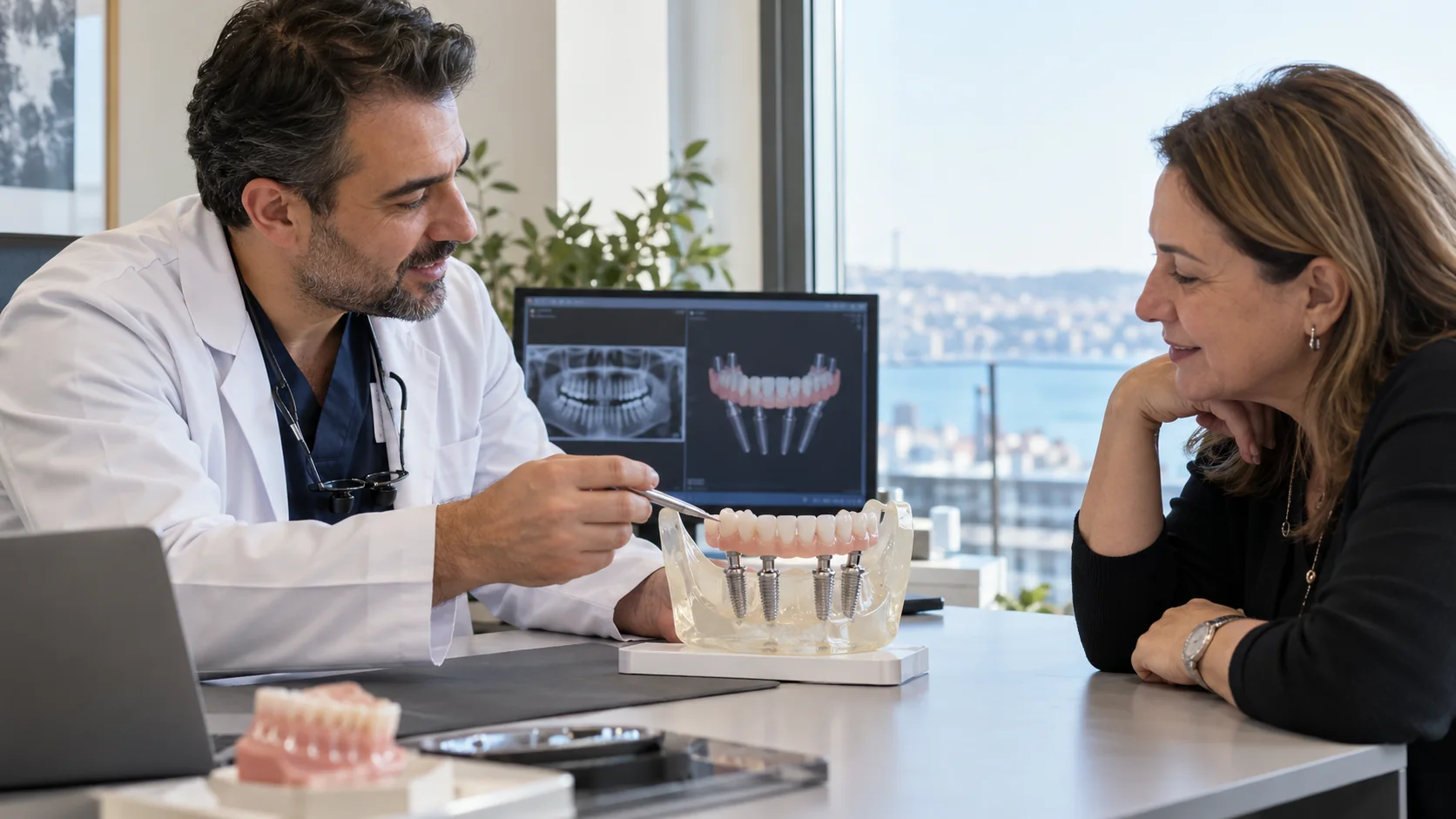
For patients with extensive tooth loss, implant planning may focus on where the strongest usable bone remains across the whole arch.
Instead of placing an implant for every missing tooth, several implants can support a complete fixed bridge.
- Upper or lower arch assessed in 3D
- Implants distributed across available bone
- Angled positions considered where appropriate
- Nerve and sinus locations assessed
- Temporary teeth may be possible in suitable cases
- Final fixed bridge follows the treatment plan
How Graft-Free Dental Implant Treatment Works
When a graft is not required, the implant process still includes diagnosis, surgery, healing and final restorative treatment.
3D Assessment
The dentist checks how much usable bone remains and where the implants can be positioned.
Implant Planning
Straight or angled implant positions are selected according to the bone and final restoration.
Implant Placement
The implants are placed according to the planned positions under local anaesthesia.
Healing & Final Teeth
The implants heal before the definitive crown, bridge or full arch is completed according to the treatment plan.
Recovery After Dental Implants Without a Bone Graft
Avoiding grafting does not remove the normal healing stage required after implant placement.
The implants still need time to become supported by the surrounding jawbone, and patients need to follow the clinic’s food and cleaning instructions.
Cool, soft foods help protect the surgical area during early recovery.
Continue softer foods and careful cleaning around the implant area.
The jawbone continues healing around the implant over the following months.
The final teeth are completed according to the implant and restorative treatment plan.

Does Avoiding a Bone Graft Reduce Dental Implant Cost?
If bone grafting is genuinely not required, there is one less clinical procedure in the treatment plan.
However, the total implant price still depends on the number of implants, implant system, temporary teeth and the final crown, bridge or full-arch restoration.
Do Not Choose “No Graft” Only for Price
The decision should come from your 3D assessment. A cheaper plan is not useful if it places implants in unsuitable bone.
- Ask how much usable bone remains.
- Ask why grafting can or cannot be avoided.
- Ask where the implants will be positioned.
- Ask whether angled implants are being considered.
- Ask what final teeth are included.
- Compare the complete treatment—not only the surgical stage.
Dental Implants Without Bone Graft in Istanbul
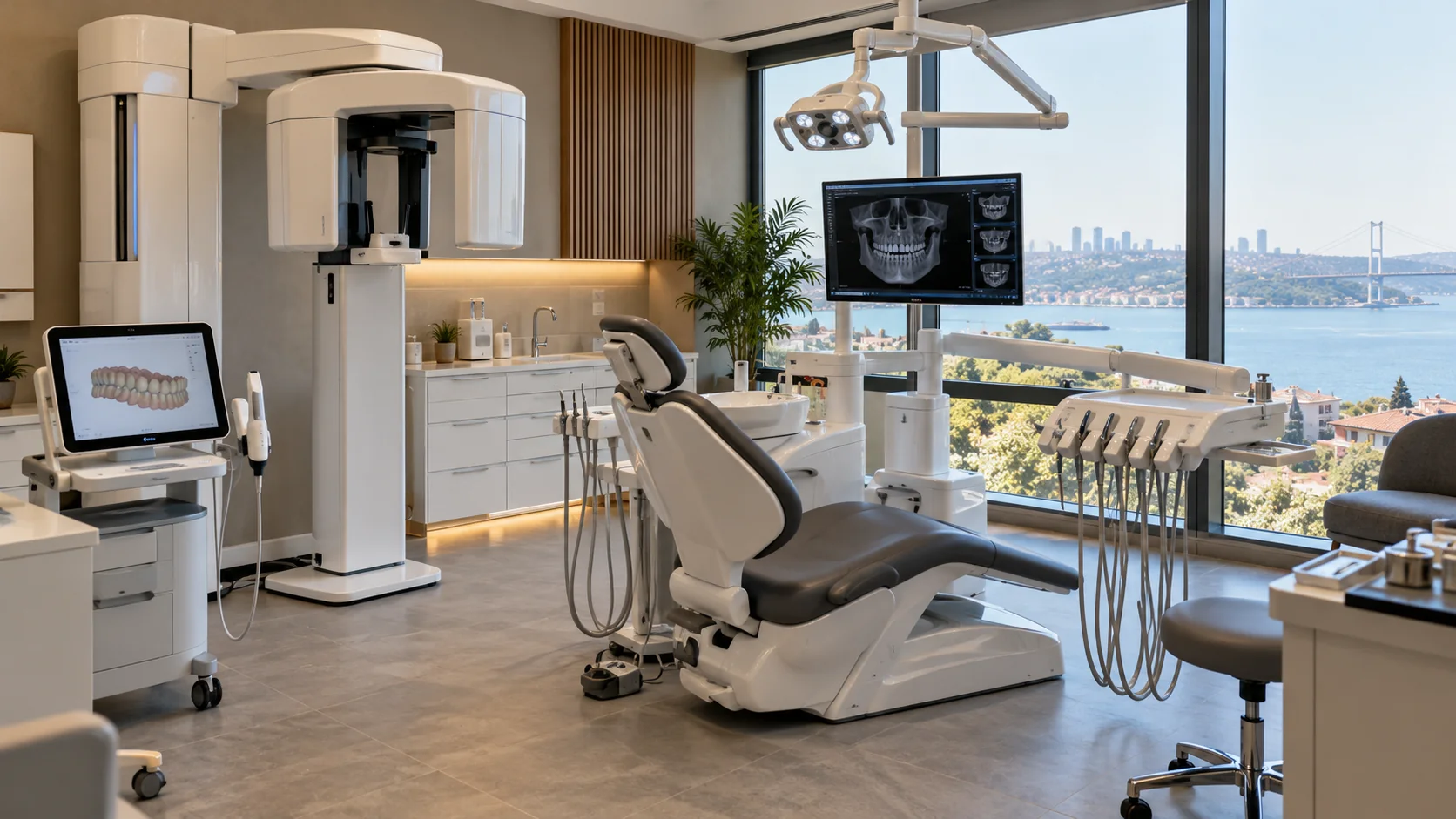
If you are travelling to Istanbul hoping to avoid a bone graft, ask for the reason behind the proposed implant positions before treatment starts.
A graft-free plan should be based on your available bone and restorative needs—not simply advertised as a faster treatment for everyone.
Questions to ask before booking
- How much usable bone do I have?
- Where would the implants be placed?
- Why can a graft be avoided?
- Are angled implants planned?
- Is All-on-4 suitable for me?
- Could I still need a sinus lift?
- What happens if the scan shows insufficient bone?
- What final restoration is planned?
Dental Implants Without Bone Graft: Common Questions
Common questions about bone loss, angled implants, All-on-4, sinus lifts and when grafting can or cannot be avoided.
Can you get dental implants without a bone graft?
Yes, in some cases. If enough usable bone remains in suitable implant positions, implants may be placed without grafting. A 3D scan is used to assess the available bone and nearby anatomy.
Can dental implants be placed if I have bone loss?
Often, yes. Depending on the amount and location of remaining bone, treatment may involve a bone graft, sinus lift or angled implants such as those used with All-on-4.
How can All-on-4 sometimes avoid a bone graft?
All-on-4 uses four implants to support a full arch, with the posterior implants placed at an angle. In suitable cases, these positions can make use of existing bone and avoid areas such as the nerve or sinus.
Does avoiding a bone graft mean the implants heal immediately?
No. The dental implants still require a healing period after placement while the surrounding bone heals around them.
Can a sinus lift also be avoided?
Sometimes an alternative implant position may avoid the sinus area, particularly in selected full-arch cases. However, if insufficient bone remains beneath the sinus at the required implant position, a sinus lift may still be recommended.
Is All-on-6 also possible without a bone graft?
Potentially, but All-on-6 uses six implants distributed along the jaw and requires suitable bone at the planned implant positions. The 3D scan determines whether the available bone is sufficient.
Why would a dentist still recommend a bone graft?
A graft may be recommended when the planned implant site is too thin or too low to provide suitable support for the intended implant position and final restoration.
Does avoiding a bone graft make dental implants cheaper?
If grafting is not clinically required, there is one less procedure in the treatment plan. The total cost still depends on the number of implants, implant system, temporary teeth and final restoration.
How do I know whether I can avoid bone grafting?
Your dentist needs to assess your jaw with appropriate imaging, including a 3D scan, to determine where usable bone remains and whether implants can be positioned safely without grafting.
Should I choose a clinic just because it promises implants without bone graft?
No. The treatment should be based on your own bone and restorative needs. Avoiding grafting is useful only when the proposed implant positions are clinically appropriate for your individual case.
Find Out Whether You Can Have Dental Implants Without a Bone Graft
Send your available dental X-ray or clear photos. Your implant plan can then be assessed to see whether existing bone may be used or whether grafting would provide a safer implant position.